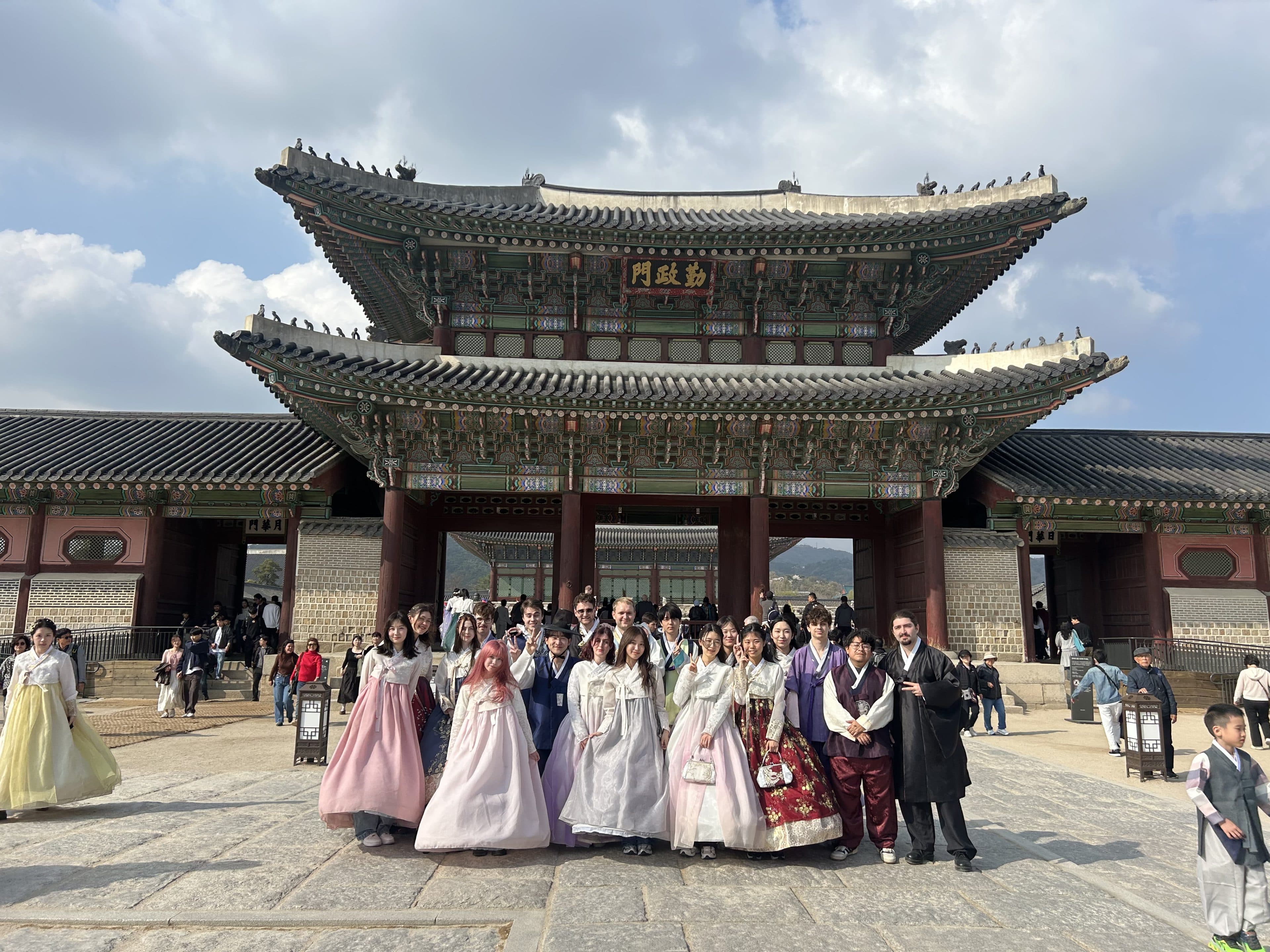
Nicolas
- BSc Informatik
- Incheon, Südkorea
- Auslandssemester
- Inha University
- Sommersemester 2025/2026
How did you prepare for your stay abroad?
I mainly followed the step-by-step application process required before starting the mobility. I’d suggest completing all steps as early as possible, since certain decisions need confirmation from the international office, and questions may come up along the way. Only universities with deadlines earlier than the default one are explicitly listed – otherwise, the default deadline applies. This is actually why I almost missed my own deadline for Inha University: I assumed it followed the default timeline, which still had two weeks left, but it turned out to be much earlier. I’d recommend either applying early or emailing the international office directly to confirm the deadline for your specific university.
What practical arrangements did you make before the exchange?
Once the university accepted my application, I only had to apply for a visa and book my plane tickets. Getting a visa for South Korea was very easy, I just went to the embassy in Vienna, no appointment needed. I filled out the application form beforehand and completed the other steps listed on the embassy’s website. For parts of the form I was unsure about, I simply left them blank and asked the embassy staff directly, which wasn’t a problem at all.
I’d also highly recommend setting up a bank account designed for travelers that supports international payments. I personally used Revolut and had no issues paying. You will need a physical card, though, as some payment terminals don’t support NFC. I ordered mine after arriving in South Korea, and it arrived within about four days.
How were you welcomed by the host institution?
There was a welcome ceremony for international students about a week before the semester started. It was moderately helpful, as it mainly covered information that had already been published earlier, but it gave you the chance to ask questions directly to current Inha University students, which was really useful. The event also offered an easy way to purchase the mandatory private health insurance.
Afterward, many students stayed outside the venue to exchange contacts, and several student clubs advertised themselves. Joining at least one student club is essential if you want to get to know other students, and especially helpful for meeting Korean students.
About finding a room or apartment and housing.
Accommodation was easy to find. Options included dorms, off-campus housing, or independently arranged housing without support. Dorm and off-campus costs were similar, but dorms included one free meal per day; I chose the dorms. Dorm price was around €830 for the full semester until mid-June, optionally an extra €200 to extend until mid-July.
Entry required a tuberculosis test, and exchange students were only placed in 4-person rooms in Dorm 2, the only dorm accessible to exchange students. Both options required full rent paid upfront. Dorm residents were grouped by nationality where possible.
Choose dorms if you want to meet people and don’t mind a shared bathroom and no kitchen (only microwave, fridge, freezer). Choose off-campus if privacy matters, you’re proactive about making friends/plans, and want to cook.
Dorms have a daily curfew from 1:30–5:00, during which the building is locked (except midterms/finals) and no entry/exit is allowed. Outsiders are never permitted inside.
What financial arrangements have you made? What was the average cost of living?
Since all Erasmus+ funds had already been used up, I had to fund the exchange myself, aside from a one-time payment of around €600 from Technikum Wien. I had some savings beforehand and was also financially supported by my parents.
On average, I spent slightly above €1,100 per month, though I didn’t actively try to cut down on expenses. You could probably reduce costs to around €500 or less by cutting back on restaurants and smaller expenses, but I wouldn’t recommend skipping experiences just to save money.
Staying at the dorms already includes one paid meal per day, so eating there often can save a good amount of money.
How would you describe the country, the culture, and the leisure activities you experienced during your stay abroad?
South Korea is a very “proper” country, similar to Japan in many ways. People are generally friendly but reserved, and unspoken social rules are widely followed. It’s expected to stay quiet on public transport (especially trains) and to properly queue in stations. This makes it a bit harder to make Korean friends, especially since most Koreans don’t speak English very well.
The country is very clean overall, and I never once felt unsafe during my stay. Theft isn’t really a concern – people tend to leave items like credit cards unattended, trusting the owner will come back for them. Cameras are everywhere, but unlike in other countries, this is openly advertised with “CCTV in operation” signs.
There are many restaurants and bars just past the back gate of Inha University, where students often spend their free time (myself included). If you enjoy games, there are also board game and video game cafés in the area.
How would you describe the program?
It varied a lot by professor. Grading was either absolute or relative, with relative grading capping top grades based on the best student’s performance – arguably easier, since even a weak performance can be “saved” if others also do poorly, especially when only passing matters.
Course registration is done online and can be confusing. If a course is full, attending the first class and asking the professor for an add usually works. English is mandatory unless the student has at least TOPIK 3. Class sizes and discussion-focus varied a lot, and group projects were common. Exams were both open- and closed-book, mixing free text and multiple choice.
Most courses relied on lectures, PDFs, and studying for midterms/finals. Some were fully online with only videos provided, easing attendance but requiring self-discipline; 75% attendance was mandatory, or the course was graded F. Workload was generally lower than at Technikum. Coursemos, Inha’s LMS, is worth installing.
Do you have any tips on what else to keep in mind?
Make sure you genuinely want to go abroad. Set an early goal for which university to apply to and aim for good grades, though the process isn’t overly strict, as the international coordinator at FH Technikum can also recommend students directly.
Don’t overthink whether the experience might not be enjoyable. Go in with an open mind and be prepared for opinions different from your own. If possible, study some Korean beforehand, as many people don’t speak English at all or prefer not to.
For packing, no adapters are needed; an international driver’s license is worth getting if you plan to drive. A tourist SIM works before receiving the ARC, after which a long-term plan can be signed up for. No cash is needed from home, but get some at the airport, as topping up the transport card requires cash. Overall, items and living costs are cheaper in Korea than in Austria.
What new skills and qualities have you acquired?
I gained basic Korean abilities and noticeably improved my English conversation skills. My social confidence also increased, and traveling alone taught me to adapt quickly, meet new people, and ask for help more readily.
Navigating bureaucracy and unfamiliar systems independently (visa, ARC, banking) was a major learning experience. I often had to piece together answers from multiple people, since information wasn’t always centralized or consistent; sometimes this worked well, other times I simply had to guess and adjust along the way.
Cross-cultural communication became second nature, adapting how I explained things when English wasn’t shared. Academically, adjusting to different teaching and grading styles, along with unfamiliar exam formats, was important, though not overly difficult to manage.
Overall, this experience significantly improved my resume and interview skills, giving me concrete examples to draw from in future applications.
How have your values and attitudes changed as a result of your time abroad?
My values didn’t change dramatically, since I was already fairly open-minded beforehand. The main shift was in how I approach meeting people – despite being quite introverted by nature, I’ve become more willing to attend social events and actively put myself out there more often than before.
Looking back, what was the biggest challenge you faced while preparing for or during your stay abroad?
The biggest challenge was handling all the administrative work, the many emails, documents to prepare, and signatures to collect and get signed. On top of that, Inha sent my confirmation letter relatively late, which pushed back when I could book flights and apply for my visa, likely increasing the cost somewhat as a result. Pretty much everything else was either not that bad or actually enjoyable.
What was your most positive experience during your time abroad?
There were many positive experiences, but joining the AZIT club and attending nearly all of their events stood out as the highlight of the exchange. I met so many people through it, had a lot of fun, and shared plenty of late nights together. I also got really lucky with my roommates, and living and spending time with them turned out to be genuinely enjoyable.
My trip to Japan and a solo trip to China after the semester were also among the most fun parts of the experience. Even during these short stays, I managed to meet people and exchange contacts.