
Jessica Dayana
Marshall Plan Scholarship
- MSc Tissue Engineering and Regenerative Medicine
- Boston, USA
- Praktikum
- Harvard Medical School Mass General Hospital
- Studienjahr 2025/2026
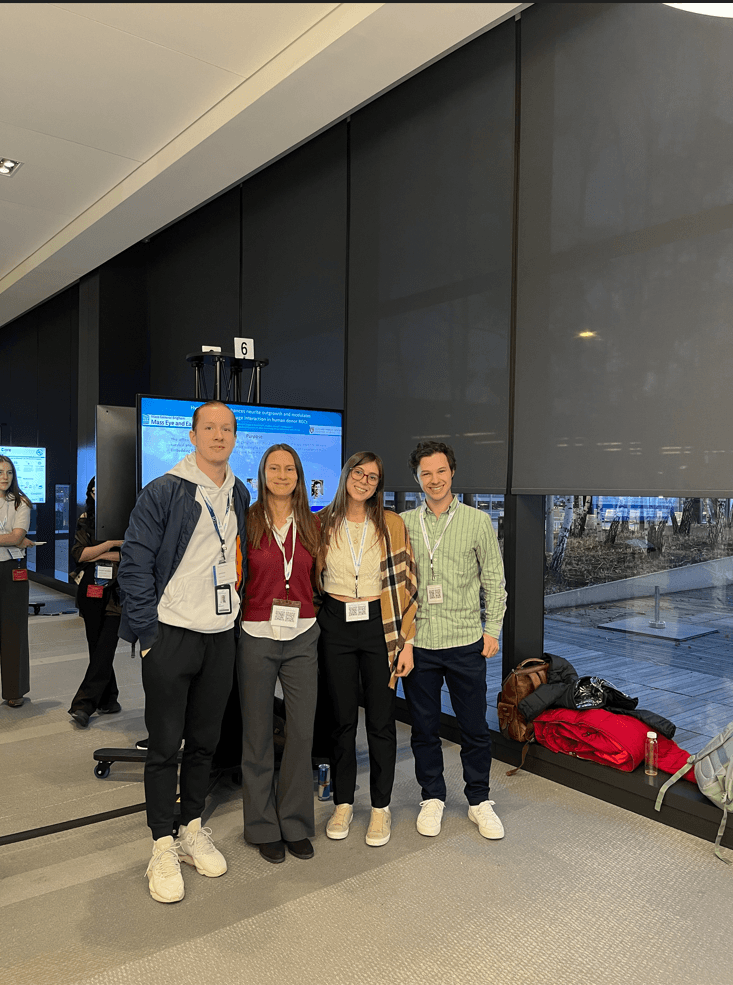
How did you find your internship? How did you apply for it? How did you prepare for your stay abroad?
I first learned about the Marshall Plan Scholarship through a friend from my master’s program at UAS Technikum Wien who was completing her thesis in Boston. Inspired by her experience, I contacted research groups working in my area of interest. I introduced myself by email, explained my academic background and research interests, and asked whether they would be interested in hosting a visiting student. After an interview with my future supervisor After an initial interview with my future supervisor, he contacted my references to learn more about my academic background and research experience. Following these discussions, we worked together on a research proposal and successfully applied for the Marshall Plan Scholarship to support my stay. My advice is to clearly explain your research interests, how they align with the host lab’s work, and discuss funding opportunities early, especially if you plan to stay in an expensive city such as Boston.
What practical arrangements did you make before the exchange?
Applying for the Marshall Plan Scholarship was the first step toward making the stay financially feasible. However, the scholarship alone was not sufficient to cover all living and travel expenses in Boston. Fortunately, my PI was very supportive and provided additional financial assistance.
The most important practical arrangement was obtaining a J-1 visa. As an international researcher, I was not allowed to conduct research activities without the appropriate visa. The host institution handled the initial administrative procedures, including the documentation required to justify my stay. Since the visa process can be lengthy, I strongly recommend starting the application as soon as you receive your acceptance. In my case, the process took more than six months, which delayed the start of my internship.
What kind of financial arrangements did you have to make?
I applied for the Marshall Plan Scholarship because the cost of living in the United States, particularly in Boston, is significantly higher than in Austria. Without external funding and the support of my PI, it would not have been possible for me to undertake this internship.
The scholarship helped cover rent, visa-related expenses, and travel costs during my seven-month stay. However, additional financial support was necessary, and I would encourage future students to secure supplementary funding whenever possible.
My average monthly expenses were approximately:
• Rent: USD 1,200
• Public transportation: USD 90
• Food: USD 400
• Health insurance: USD 100
• Mobile phone plan: USD 30
• Social and leisure activities: USD 50
The cost of living was considerably higher than I had anticipated. Adjusting to these expenses was one of the biggest financial challenges of my stay.
How was your onboarding and orientation at the company?
The institution was highly organized and offered a structured onboarding process for new researchers. This helped me become familiar with both the administrative procedures and the workplace culture. Before starting in the laboratory, I completed several mandatory training modules covering topics such as laboratory safety and institutional regulations.
Within my research group, I received hands-on training in the techniques required for my project. My colleagues were supportive and always willing to answer questions, which made the transition into a new research environment much smoother.
Please describe your accommodation
I rented a room from a wonderful host who had been renting rooms to visiting researchers and students for several years. She was recommended to me by a friend, and the arrangement worked very well. I had my own bedroom and private bathroom, and she provided everything necessary for a comfortable stay.
Finding affordable housing close to the hospital was challenging, so I chose accommodation in Jamaica Plain and commuted approximately 45 minutes each way. Jamaica Plain is a pleasant residential neighborhood with many parks and opportunities for outdoor activities. All utilities were included in the rent, which was USD 1,200 per month. Overall, I had a very positive housing experience.
How would you describe the country, the culture, and the leisure activities you experienced during your stay abroad?
One aspect I liked was how much Boston encourages community engagement through public events. Throughout the year there are concerts, marathons, outdoor fitness activities, cultural festivals, and many other opportunities to participate in city life.
Boston is also a highly international and diverse city, which made it easier to settle in and meet people from different backgrounds. As the home of several world-renowned universities, hospitals, and research institutions, the city attracts students, researchers, and professionals from all over the world. This international environment created many opportunities for networking and friendship.
I found Boston to be an exciting and welcoming place to live. Being surrounded by people from diverse cultures helped me feel comfortable and supported throughout my stay. Overall, I believe it is an excellent destination for students and researchers seeking both professional and personal growth.
How would you describe the internship?
My internship was a transformative experience. I had the opportunity to work with professionals from different disciplines, which broadened my perspective and contributed significantly to my personal and professional development. Furthermore, it allowed me to strengthen my technical expertise in biomedical research while also participating in seminars, conferences, and networking events organized by my institute.
At times, the experience was challenging because research projects require a high level of independence and self-motivation. However, these challenges helped me grow as a scientist and become more confident in my abilities. Most importantly, this experience opened many doors for my future career. Following the internship, I was accepted into several PhD programs in both Europe and the United States, and I ultimately secured a Marie Skłodowska-Curie doctoral position, which I will begin after completing my master’s degree.
What new skills and qualities have you acquired?
Many of the projects I worked on required independent decision-making and careful organization, which strengthened both my scientific reasoning and problem-solving abilities and my experimental planning
Technically, I gained experience in neuronal cell differentiation, live-cell imaging, and several molecular biology techniques. I also improved my ability to design, execute, and analyze experiments independently.
Beyond technical skills, I developed stronger communication and interpersonal skills by collaborating with colleagues from diverse cultural and academic backgrounds. Networking with researchers and building professional relationships contributed significantly to my personal growth.
Perhaps most importantly, I learned patience and resilience. Research rarely progresses exactly as planned, and setbacks are inevitable. Through this experience, I learned to approach challenges step by step and to value high-quality, reproducible results over rapid outcomes.
How have your values and attitudes changed during your time abroad?
My experience abroad increased my confidence in both my scientific abilities and my capacity to adapt to new environments. Having lived and studied in different countries, I have become more comfortable working across cultures and adjusting to unfamiliar situations.
I also gained a greater appreciation for collaboration, mentorship, and mutual support within research environments. The generosity and guidance I received from colleagues inspired me to support and mentor others in the future. Overall, this experience strengthened my adaptability, empathy, and appreciation for teamwork.
Looking back, what was the biggest challenge you faced while preparing for or during your stay abroad?
The most challenging aspect was obtaining the visa. As a Colombian citizen, I found the U.S. visa process significantly more complex and stressful than the procedures I had previously experienced when moving to Austria.
The lengthy processing times created uncertainty and delayed the start of my internship. Managing these administrative requirements while preparing for an international move was one of the most demanding parts of the experience.
What was your most positive experience during your time abroad?
Looking back, I am extremely grateful for the opportunity to participate in this program. It allowed me not only to gain insight into cutting-edge biomedical research but also to contribute actively to ongoing scientific projects.
The experience significantly improved my research skills, both technically and intellectually. Working in a world-class research environment gave me firsthand exposure to high-quality science and taught me how successful research projects are developed, managed, and communicated. These lessons have had a lasting impact on my career aspirations and will continue to influence my future work as a researcher.