Simon
Marshall Plan Scholarship
- MSc Robotics Engineering
- Cambridge, USA
- Praktikum
- MIT
- Sommersemester 2025/2026
How did you find your internship? How did you apply for it? How did you prepare for your stay abroad?
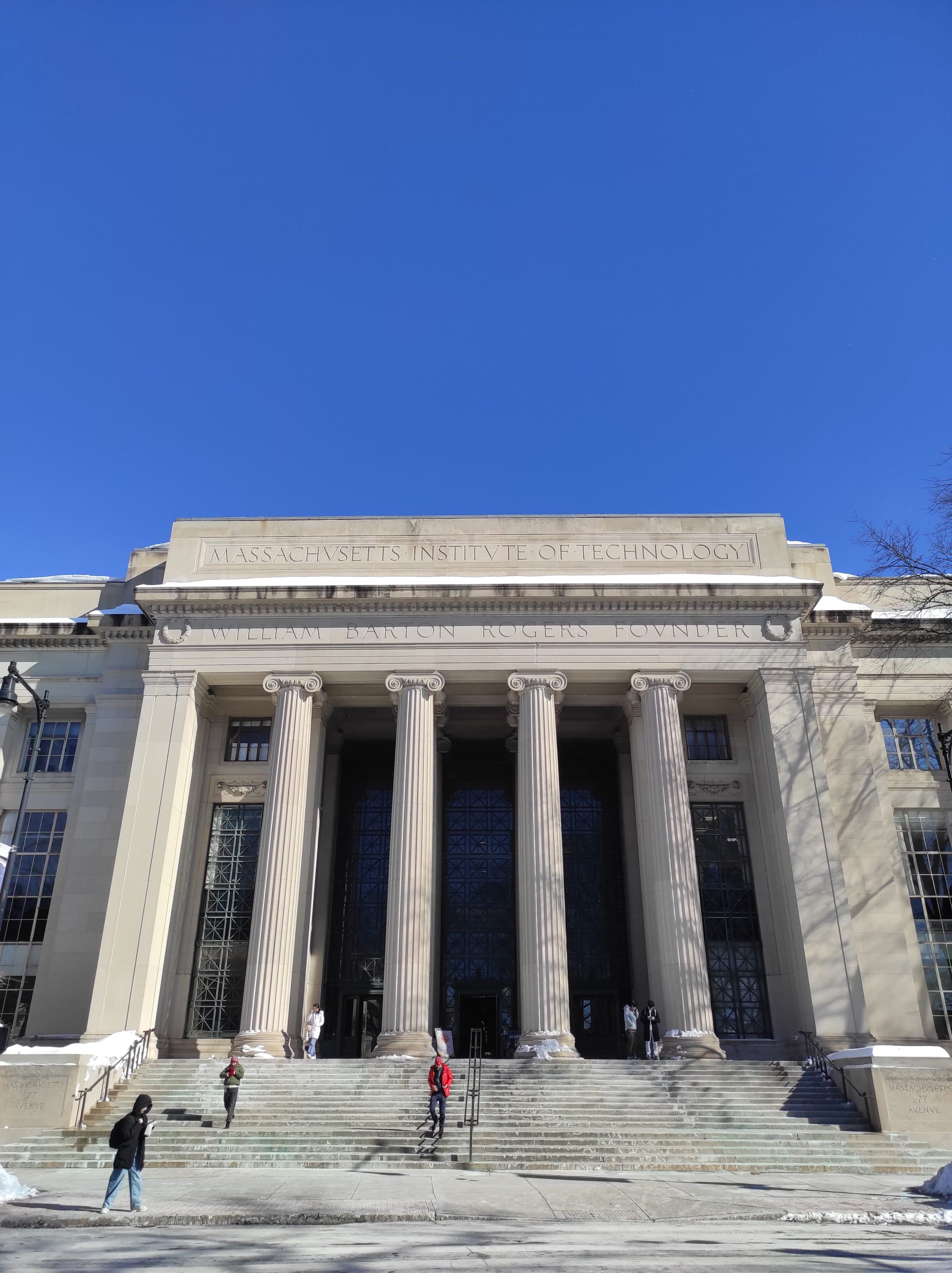
To have embarked on a term as a visiting student at the Massachusetts Institute of Technology (MIT) represents more than an academic milestone. It was an entry into one of the world’s most concentrated ecosystems of innovation. From my moment of arrival on the Cambridge campus, the reasons behind the institution’s global ranking became clear to me. The density of talent, the commitment to empirical excellence, and the intellectual energy within the infinite corridors of the interconnected and countless buildings validate their reputation. This report aims to outlines my academic journey, the practicalities of living in Cambridge, the financial dynamics, and the community integration I have experienced during the stay.
What practical arrangements did you make before the exchange?
Navigating the bureaucratic requirements of moving to the United States as an international researcher is a (immensely) complex process. In this regard, the MIT International Students Office (ISO) served as an invaluable asset. The office manages visa processing, resolves administrative queries, and offers continuous orientation support, significantly reducing the friction of cross-border relocation.
What kind of financial arrangements did you have to make?
The greater Boston area is notoriously expensive and disorganised. From housing to daily expenses, the cost of living is exceptionally high. While a research grant provided me with a vital financial cushion and allowed for full project focus, the local financial reality remained demanding. The grant funding did not cover half the actual price of university attendance and a baseline standard of living, making robust financial planning and supplemental budgeting absolutely necessary for international students to manage the costs of rent, groceries, and local services (Train, Bus, Beers).
How were you welcomed, trained, and introduced to the company?
The university structure integrates visiting researchers efficiently (obviously, most of them are internationals). MIT exhibits a distinct and to me surprising lack of elitism, the campus culture is driven instead by shared curiosity and collaboration. Whether in a seminar room or the Stata or Student Centre, visiting researchers are treated as peers within the community, regardless of academic seniority. This inclusive ethos extends directly into the laboratories and lecture halls. The research group facilitated immediate integration into laboratory workflows and critical brainstorming sessions from day one. Being granted the autonomy to contribute to ongoing projects allowed me the best use of limited time on-site, transitioning smoothly from a visitor to a core team contributor.
Please describe your accommodations
I lived on campus in Grad Student Housing. It was super expensive, but immensely nice and helpful with the workload, worktimes and overall quality of living. MIT has infrastructure for the application process.
How would you describe the country, the culture, and the leisure activities you experienced during your stay abroad?
Navigating the local infrastructure presented a steep learning curve, particularly regarding housing. Cambridge and the greater Boston area offer a distinct mix of historic charm and modern infrastructure. The urban area is vibrant and dense with researchers, entrepreneurs, and students. However, securing accommodation and adapting to the regional cost of living requires significant preparation. While the American infrastructure often scared me, with its rudimentary, the City of Cambridge luckily scored in that regard.
How would you describe the internship?
I worked on adding agentic AI to manufacturing in CNC-milling. My masters thesis was about the development process and the prototype testing of an AR Interface. For future reference, an exchange at MIT was an extraordinary opportunity that deliverd precisely the scale of innovation it promised. However, it is vital to understand that this experience is in no way standard, nor was it easy. Balancing the intense academic pace and immense workloads and stress with the severe financial and logistical realities of the Cambridge area was just as demanding as it sounds. BUT! for those prepared to navigate these challenges, the return on investment is unparalleled. And I wish for anyone to experience it!
How did your values and attitudes change during your time abroad?
I really love Vienna. We have it so good here! The States were amazing when it comes to knowledge gathering and living for the given time.
Looking back, what was the biggest challenge you faced while preparing for or during your stay abroad?
Try to go there during the summer term. The winters in Boston are truly brutal!
It does not help that you basically do not see the sun for a long time.
What was your most positive experience during your time abroad?
Even outside of MIT, there were a lot of possibilities for cooperation, Universities like Harvard, Northeastern and the Boston University are very keen on working with MIT. So going out and working, visiting and even getting Student IDs and credits at those institutes is all within reach.