ZIRBE (City of Vienna Expert Team for Circular Construction)
MA23, Call 39: Endowed Professorships and Expertise Teams for Teaching and Research
(MA23 – Project 39-04, Circular Construction)
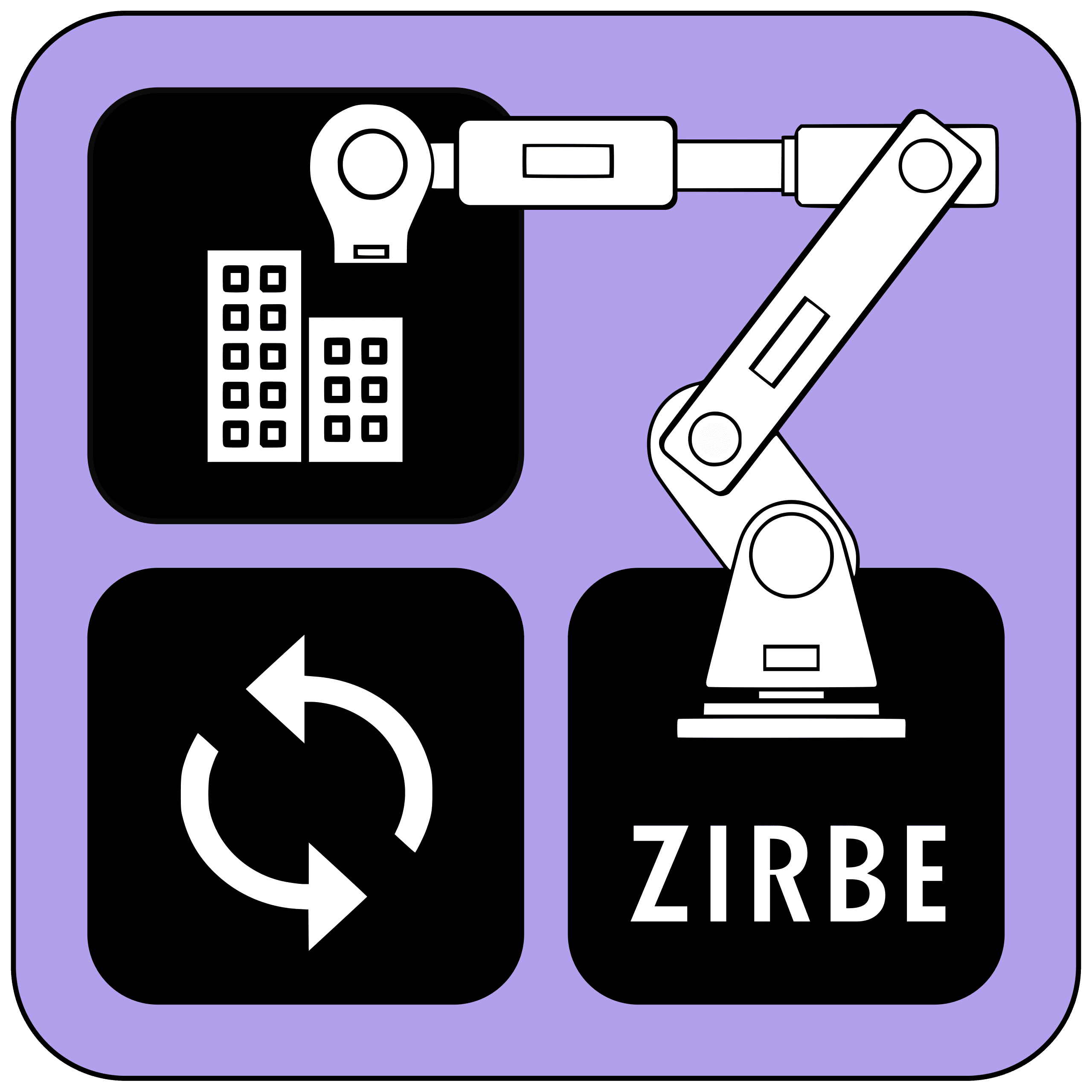
To reduce the rising consumption of resources and energy in the “construction and building” sector, as well as the resulting waste and associated environmental impact from emissions into the air, water, and soil, the City of Vienna’s development strategies call for a fundamental transformation from a linear economy to a circular economy. In addition, so-called frugal solutions—which are characterized by resource conservation and low complexity—are being discussed in applied research.
Digital and automated technologies can support the implementation of various circular economy strategies related to the new construction, remodeling, and renovation of buildings. Specific examples of autonomous or automated robotic systems include
a) automated production to optimize processes and reduce raw material consumption,
b) on-site additive manufacturing of components using recyclable materials,
c) robot-assisted assembly processes,
d) the more non-destructive demolition of building components to enable the reuse of building materials, and
e) the automated sorting of used materials to make recycling processes more efficient.
Circularity assessments of components and systems also require comprehensive knowledge of components, materials, ingredients, and chemical substances, as well as details regarding a component’s repairability, spare part availability, and proper disposal. Digital systems can be used to provide real-time data throughout the entire life cycle.
In the interest of sustainable (urban) development, it is necessary to evaluate the respective circular construction concepts in terms of their environmental and social impacts and, if necessary, adapt them to incorporate needed improvements. To this end, a comprehensive constructive technology assessment—conducted alongside development processes and employing various methods such as consequential life cycle assessment (LCA) or social LCA—is an appropriate approach. Involving stakeholders and affected parties in the design processes offers the opportunity to anticipate the diverse living environments of those affected and to incorporate them into the planning and design process.
The transition to a circular economy presents an interdisciplinary challenge. An effective design for a circular economy requires an integrative research approach that brings together various disciplines—such as building services engineering—and, in line with the “Triple Transition,” digital data collection and analysis, automated solutions, and the analysis of environmental and social impacts.
The ZIRBE project focuses on the holistic development of frugal and circular-oriented concepts for circular construction. Building on the existing expertise of the “Industrial Engineering” faculty, the project aims to systematically expand digital and automation skills, as well as environmental assessment and social science competencies in technology assessment, and to deepen these skills through demonstration projects. The technical, methodological, and interdisciplinary competencies will be integrated into research and teaching at the UAS Technikum Wien. Through annual workshops designed to facilitate regular exchange between researchers, businesses, and the City of Vienna, ZIRBE aims to make a significant contribution to the implementation of Vienna’s climate goals.


Senior Lecturer/Researcher
Head of the City of Vienna's Circular Construction Competence Team (ZIRBE)
Team and Cast:
Head of the City of Vienna Competency Team:
- Anna-Maria Lipp
Staff members of the City of Vienna’s Competence Team:
- Dragana Dimitrijevic
- Silvija Hujdurovic
UN Sustainable Development Goals