Blended Intensive Programme: „Technology in a Smart Society“ 2026 brings international students together
08 July, 2026
The Erasmus+ Blended Intensive Program (BIP) “Technology in a Smart Society” entered its next round in 2026: During the summer semester, 27 students from Austria, Finland, and the Netherlands worked in international teams on technologies for a “smart” society.
The range spanned from systems for locating people behind walls — which can be helpful after earthquakes, for example — to an app for sensor-based plant care. The projects impressively demonstrated just how much innovative potential lies in international collaboration.
From March 9 to 13, the Kick-Off Week marked the start of the BIP in Rovaniemi, Finland. Instructors Michael Schebek and Cedric Steininger from the UAS Technikum Wien, as well as Franco van Gastel from Fontys UAS (Eindhoven, NL) along with their students set off for the far north, where ideas knew no national borders. Amid the deepest winter atmosphere, the travelers were welcomed by Tommi Kokko and Toni Westerlund at Lapin AMK. The event kicked off with a team-building activity: In the Duplo-Masters, the newly formed groups used creativity and humor to design the “perfect robot” and playfully brought ideas for socially oriented systems to life. Of course, no event would be complete without some quirky team names: Wavy Whales, DAS 501, FenixTech, M8’s, and BeerBus were born—and ready to tackle projects.
Practical workshops were held in preparation: In Mechatronics, participants learned the basics of actuators, sensors, and microcontrollers for simple systems. Node-RED covered rapid IoT prototyping workflows. A Jetson workshop demonstrated the capabilities and applications of on-device AI, while an image processing workshop introduced participants to computer vision. In addition, concepts of the Digital Twin as a bridge between the real and virtual worlds were covered. The inspirational session “What is a Smart Society?” helped participants refine project ideas, find mentors, and define their work plans.
There was no shortage of cultural experiences either. An archery session organized by Finnish students, a visit to the Arktikum Museum on the history and environment of Lapland and a trip to Santa Claus Village on the Arctic Circle provided unforgettable memories. A group dinner marked the end of the kick-off week, which also signaled the start of the virtual project phase. With individualized focus areas, close contact with their mentor, and regular online meetings—including recurring confusion about time zones—the team members implemented parts of their systems at their own home institutions.
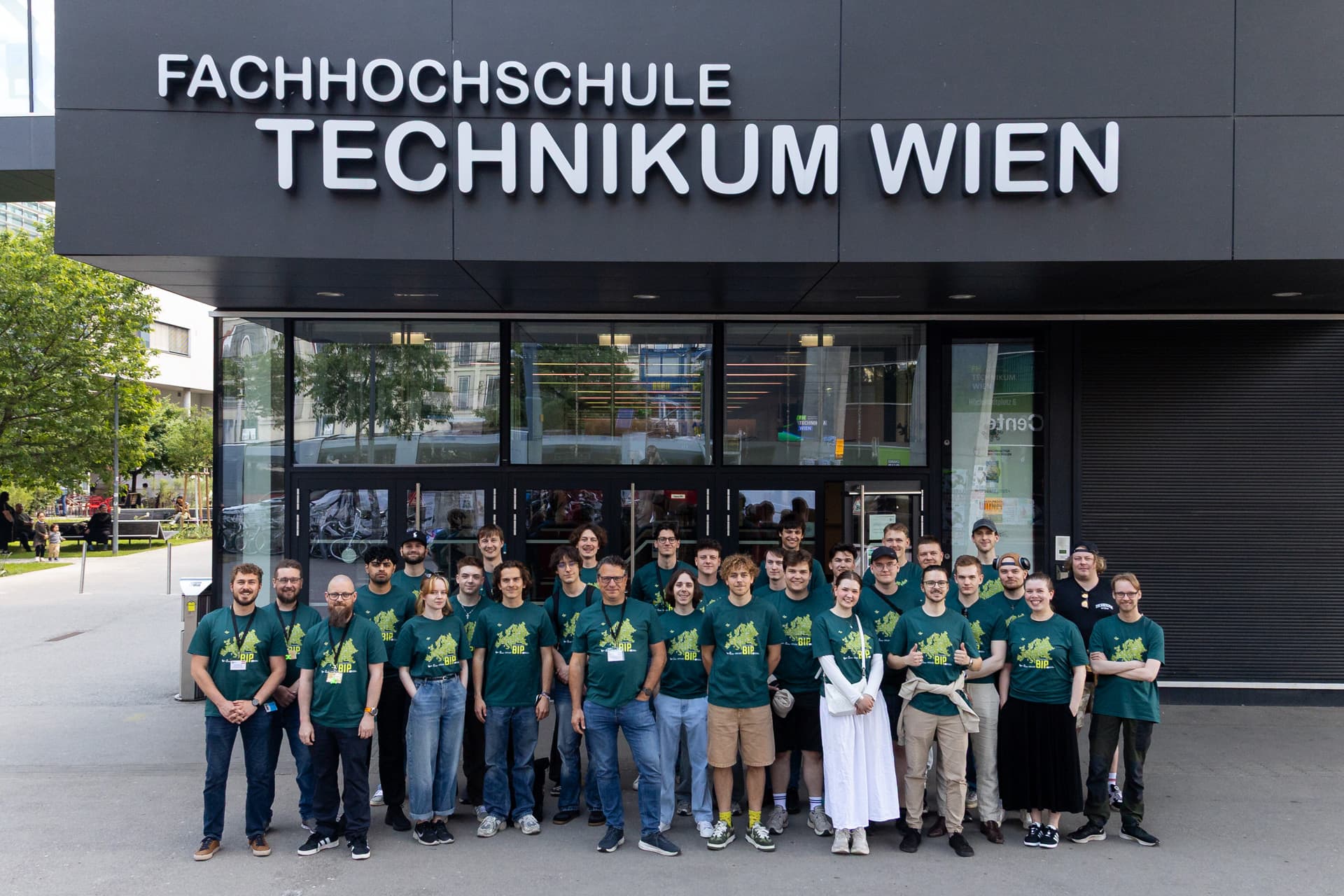
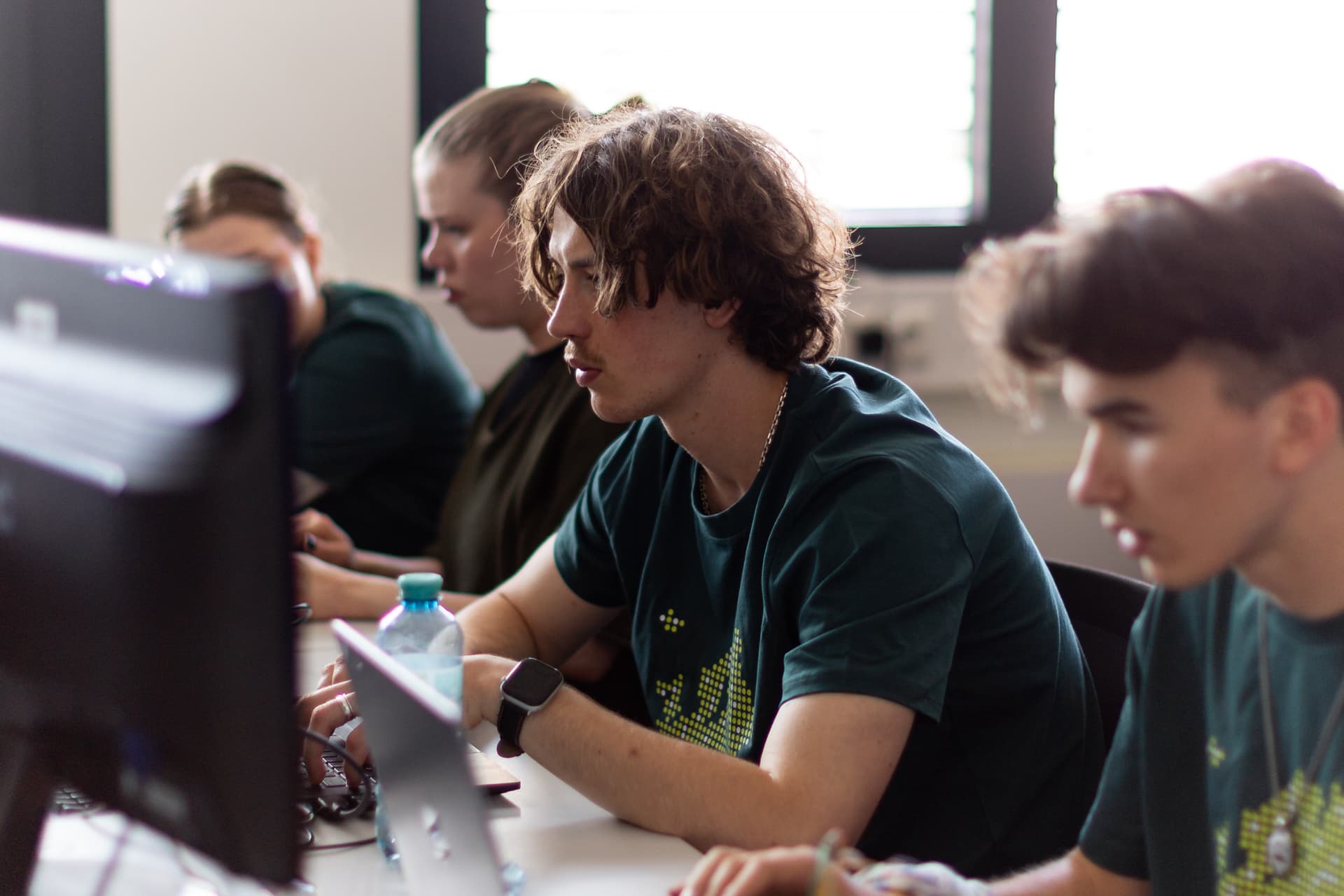
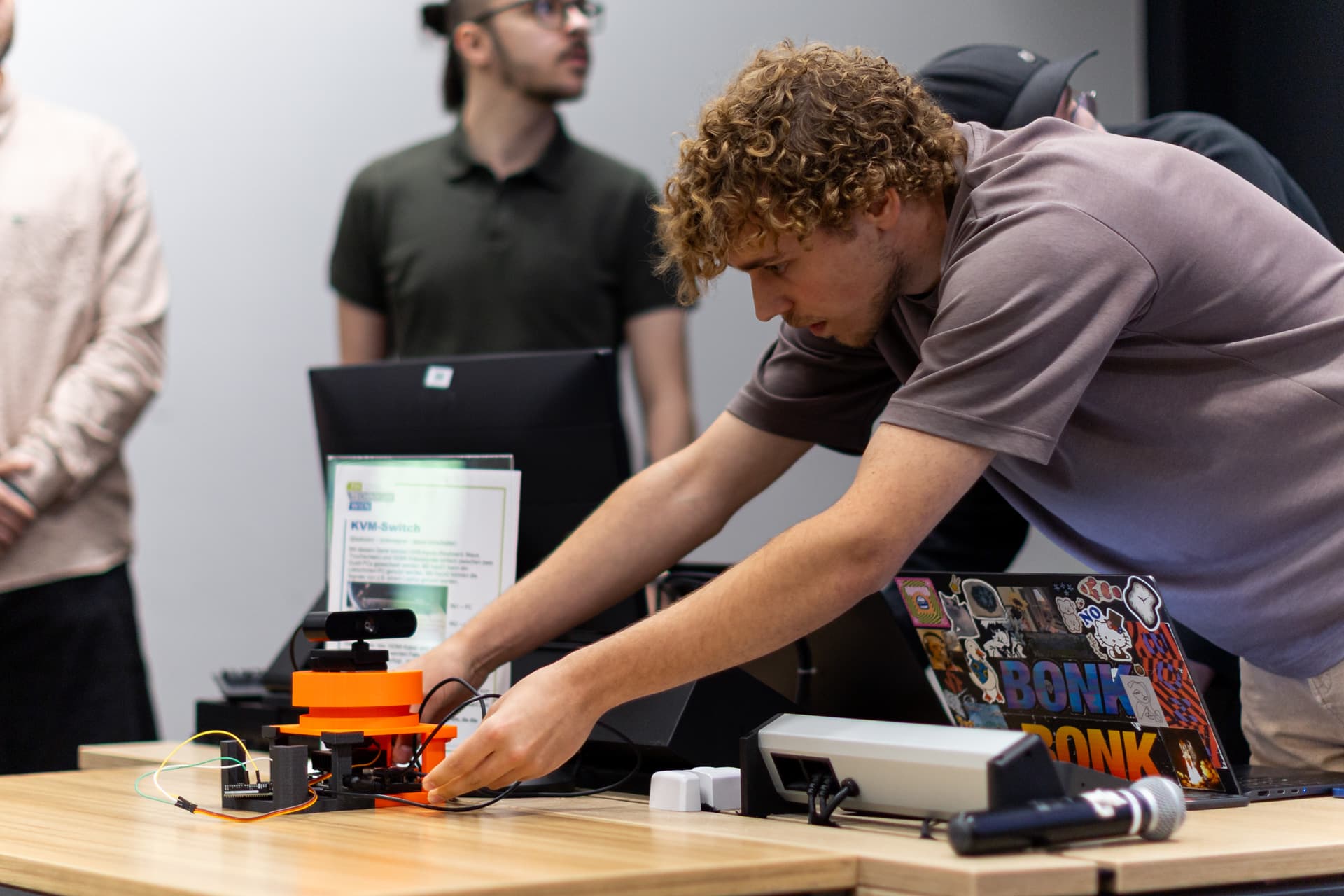
From May 18 to 22, the time had finally come: The BIP’s Wrap-Up Week kicked off at the UAS Technikum Wien. Now it was time to assemble the subsystems, put the finishing touches on them, and test them to their limits. Working from early morning until late at night—whether in the lab or in their own hotel rooms until the early hours of the morning—brought the students closer together and
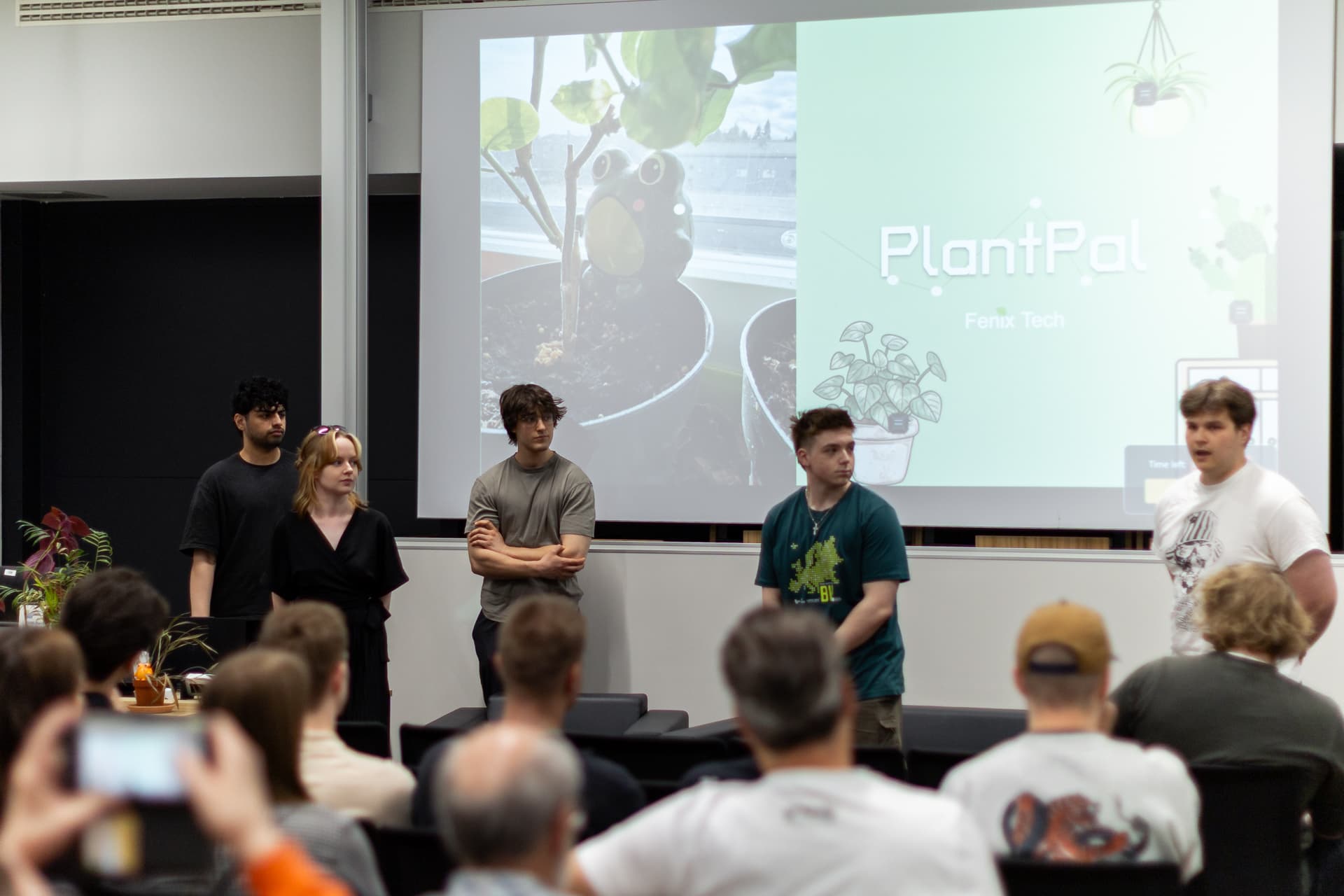
created the right project spirit. A city tour led by Eugene Quinn provided a welcome change of pace; he guided through the center of Vienna and always had an exciting fun fact up his sleeve. On Friday, the teams presented their results. The highlights were two Wi-Fi-based people-tracking systems, a software-based wildfire early-warning system, an autonomous cleaning robot for solar panels, and artistically designed plant sensors with app connectivity and AI-powered care recommendations.
The BIP “Technology in a Smart Society” has been organized for several years by UAS Technikum Wien, Lapin AMK, and Fontys UAS. Blended Intensive Programmes — funded by Erasmus+ — combine a short period of in-person learning with a virtual phase, thereby creating the opportunity to flexibly structure international learning experiences. The goal is to bring together students from different countries and disciplines, offer them innovative teaching formats, and promote collaboration in international teams. For more information, please contact Sabine Frank, the coordinator in charge at the International Office of the UASTW at short.term.mobility@technikum-wien.at or visit our website.
Erasmus+ – Changing lives, opening minds