Vienna Week as Part of the Erasmus+ Blended Intensive Program (BIP)
03 February, 2026
International students worked together for a week on a practical wind energy project. The focus was on exchange, applied research, and intercultural cooperation.
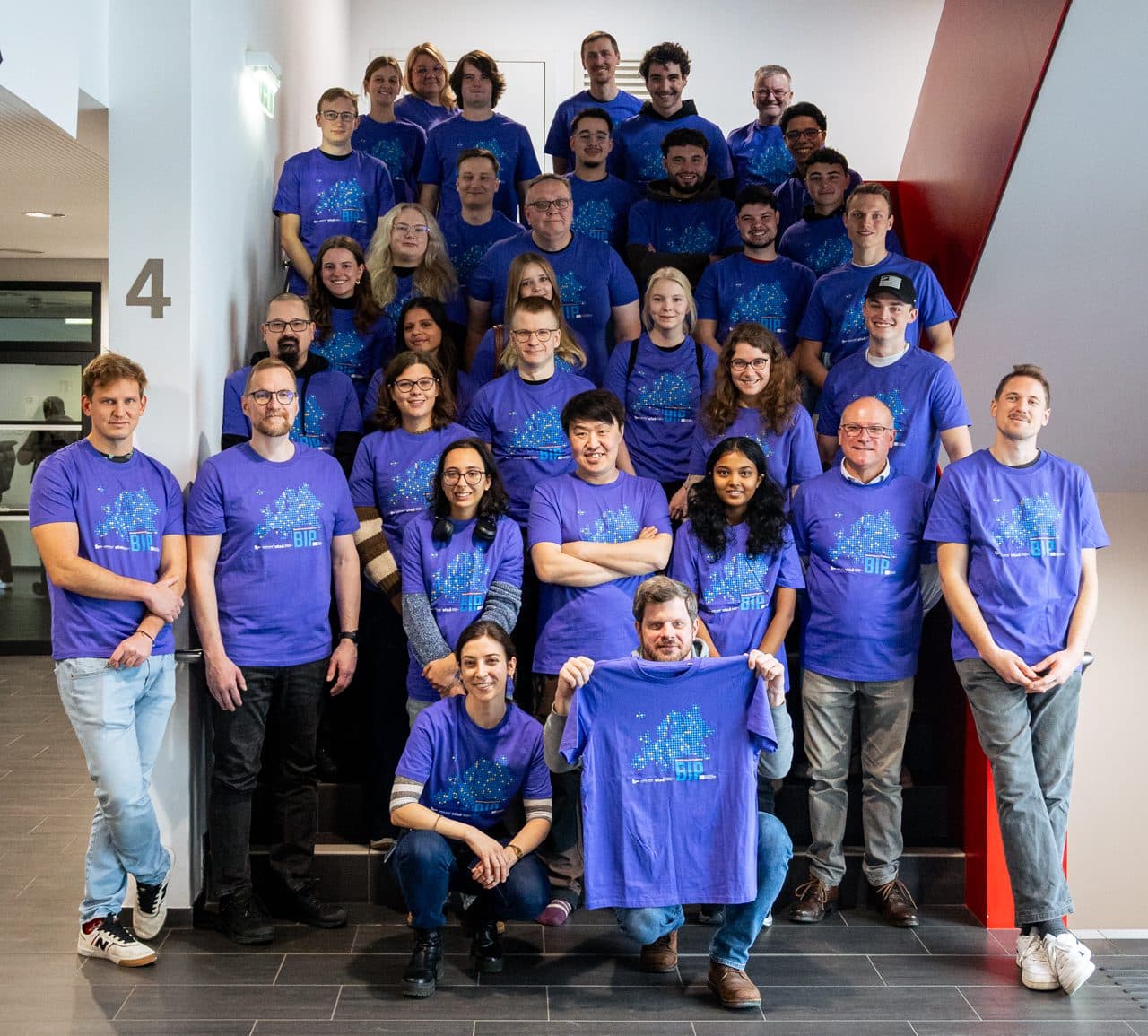
At the end of November 2025 the Vienna Week of the BIP “Cooperative International Student Project (CIP)” took place once again at the University of Applied Sciences Technikum Wien – an intensive, international teaching and exchange format that brings together students and teachers from several European partner universities. This year, we once again welcomed participants from Lapland University of Applied Sciences (LUAS), Universidade de Trás-os-Montes e Alto Douro (UTAD), and UAS Technikum Wien (FHTW). The BIP is organized by FHTW as part of the “Renewable Energies” degree program offered by the Faculty of Industrial Engineering in collaboration with the aforementioned partner universities in Finland and Portugal.
The week offered a varied combination of technical input, workshops, excursions, and cultural activities—an ideal mix for building knowledge, strengthening international cooperation, and experiencing Vienna as a hub of innovation.
The project once again focuses on wind energy, in particular the Savonius rotor—a vertical axis wind turbine. Named after Finnish engineer Sigurd Savonius, the Savonius rotor is known for its unique design, which allows it to operate efficiently even in turbulent or frequently changing wind conditions. This adaptability makes it suitable for various applications and particularly valuable for decentralized energy generation, which is especially suitable for situations where wind directions are unpredictable, such as in urban environments with complex wind patterns due to buildings and their structures. Therefore, this type of energy generation is often used in off-grid scenarios and small wind energy projects.
As part of the project, various configurations of the Savonius rotor were produced in the 3D Printing Laboratory at Lapland UAS in the run-up to the attendance week in Vienna, which were then tested extensively in Vienna at the end of November in the FHTW wind tunnel at EnergyBase.
Excursion to the Bruck/Leitha Energy Park
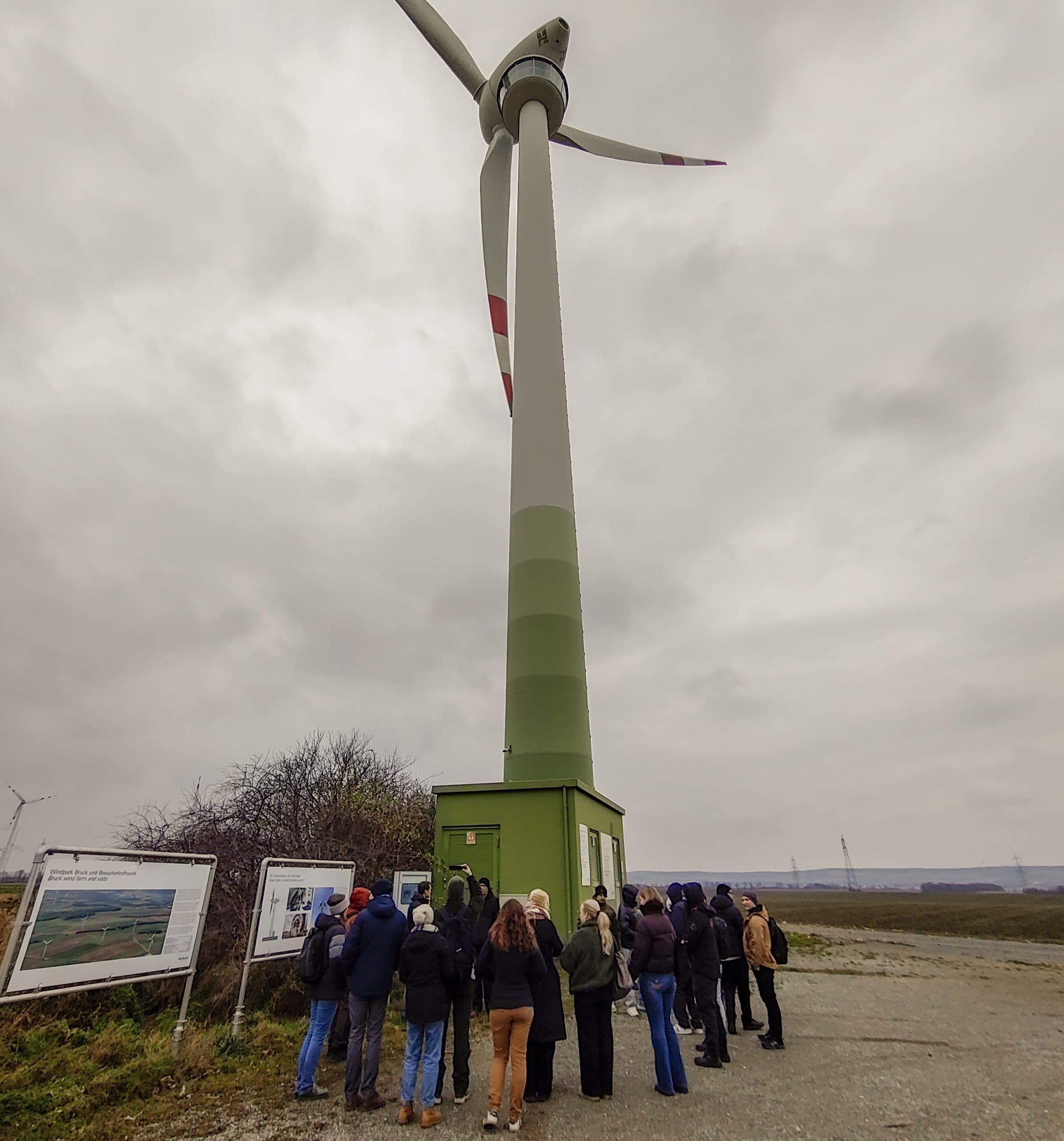
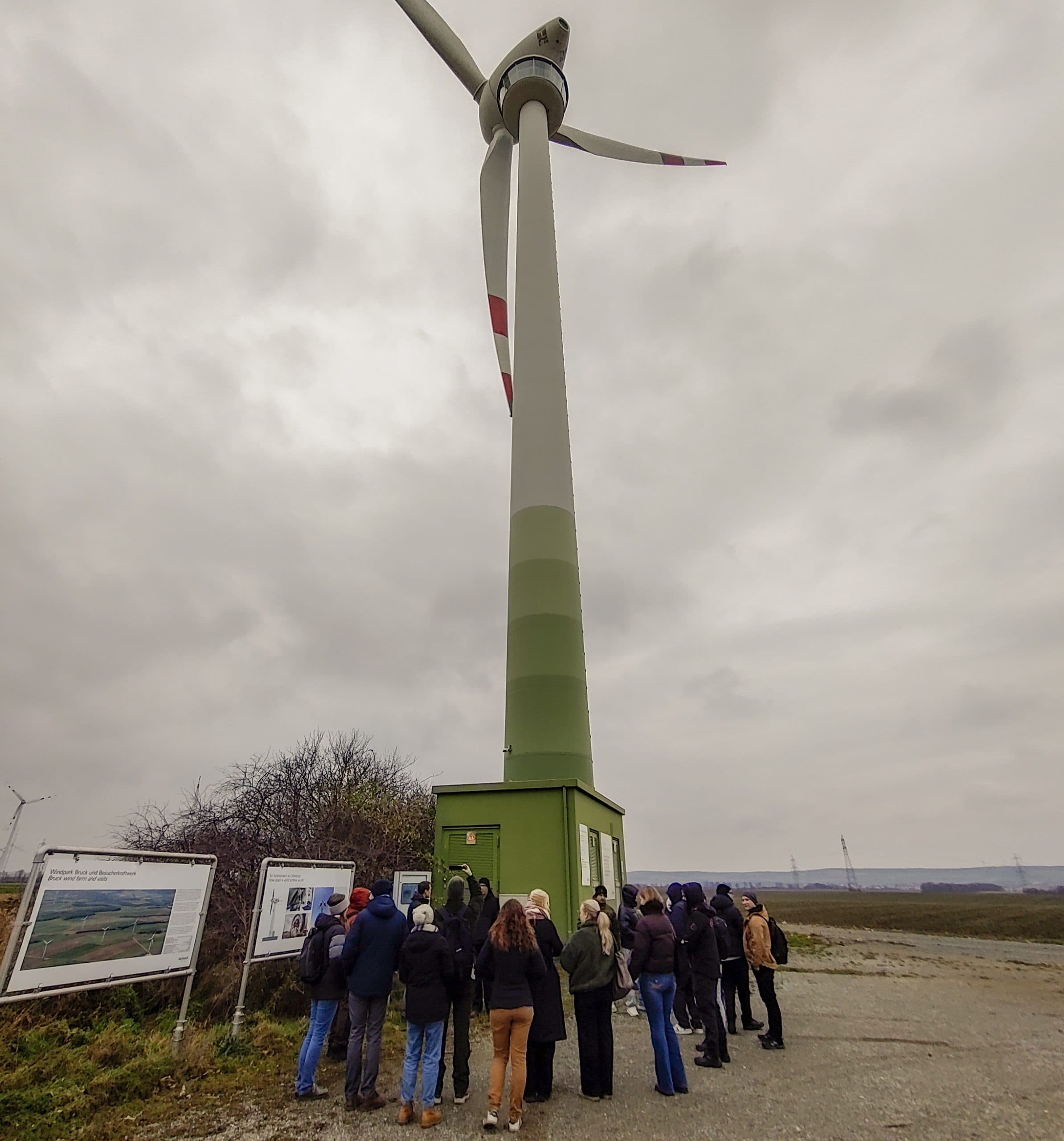
During the week in Vienna, the student teams not only had the opportunity to test the rotors, but also to attend workshops on presenting in English and to work on their project presentations and reports. The week in Vienna also included an excursion to the Bruck/Leitha Energy Park, where the students visited a wind turbine with an integrated viewing platform. A city tour and a group dinner completed the program.
Rotors tested for efficient battery charging solutions
In January 2026, as part of the student project, the various rotors at UTAD in Portugal were also tested from an energy production perspective to find efficient solutions for charging a battery. Various systems for converting mechanical energy into electrical energy were investigated.
The student project is expected to be held again next year. The project is particularly interesting for students who are unable to spend a longer period abroad for professional or personal reasons, but still want to gain international experience.
Further Information:
Cooperative International Student Project (CIP) becomes Blended Intensive Programme (BIP): The project’s focus is on wind energy
International student project CIP brings a third partner on board
International Office – UAS Technikum Wien