Wind Tunnel, DC Laboratories And AI: UAS Technikum Wien Engages In An Exchange With Universities In Görlitz And Dresden
22 June, 2026
The exchange led to specific improvements in the wind tunnel and new ideas for teaching. At the same time, it paved the way for future research projects on direct current and AI.
Through a visit to partner institutions in Germany, UAS Technikum Wien has further strengthened its international collaboration in the fields of wind energy, simulation and energy technology. Albert Benoni and Momir Tabakovic (both lecturers and researchers at the Faculty of Industrial Engineering at UAS Technikum Wien) recently visited partner institutions in Germany, where they strengthened existing collaborations and explored new joint projects.
Investigations into wind turbines and individual wind tunnel components
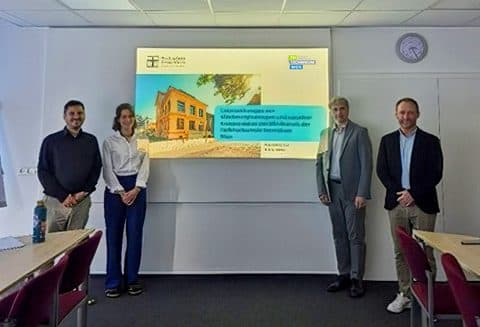
A particular highlight of the visit was the successful defence of Helene Oriwol’s practical project at Zittau/Görlitz University of Applied Sciences. The student completed her practical placement during the winter semester 2025/26 at UAS Technikum Wien and, as part of the first collaboration between the two universities, focused on the topic ‘Investigations into wind turbines and individual wind tunnel components’.
Under the academic supervision of Karel Frana and with on-site support from Albert Benoni, key issues relating to the wind tunnel were simulated and analysed. Even during the course of the work, initial opportunities for optimisation were identified and proposed. Together with Momir Tabakovic (Head of the Renewable Energy Technologies Research Group), Albert Benoni (Head of the Material Science & Mechanical Systems Research Group) attended the final presentation at Zittau/Görlitz University of Applied Sciences and took the opportunity to engage in a professional exchange with their German colleagues.
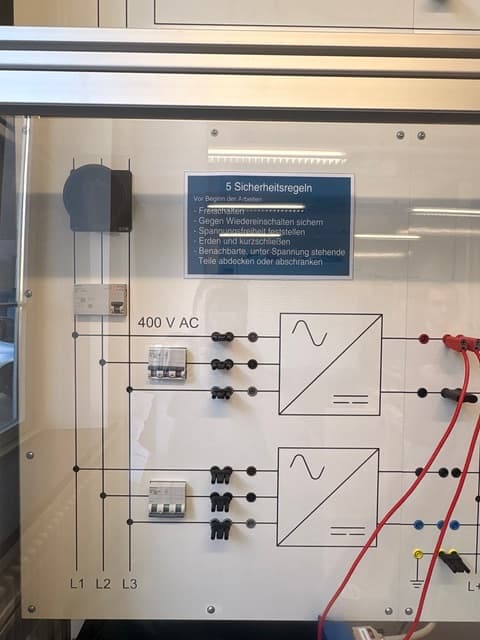
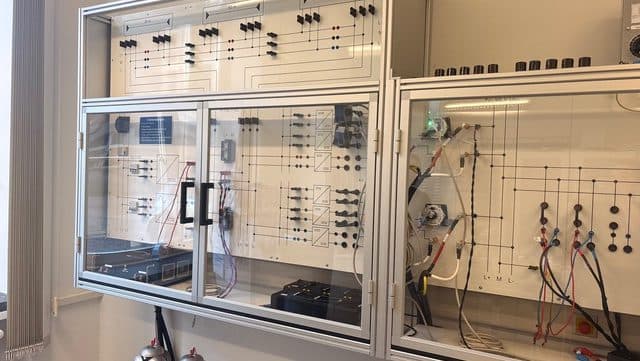
Current developments relating to direct current laboratories and the expansion of direct current grids
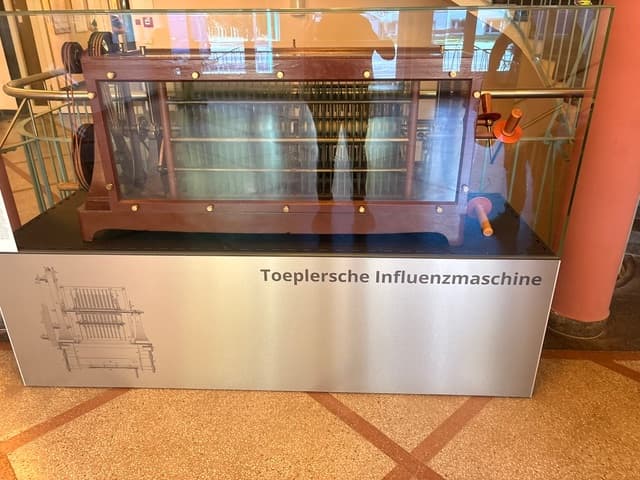
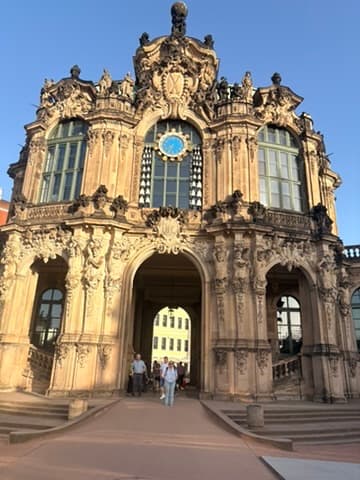
Following this, the two also visited colleagues at the Dresden University of Technology. Discussions focused on current developments relating to direct current laboratories and the expansion of direct current grids, as well as the use of artificial intelligence in teaching. Furthermore, opportunities for future joint research and teaching projects were explored.
Further Information:
Zittau/Görlitz University of Applied Sciences
Dresden University of Technology
Faculty of Industrial Engineering – UAS Technikum Wien
Renewable Energy Technologies Competence Area – UAS Technikum Wien
Picture Gallery: