Drones4Kids: Preschoolers Discover the World of Drones
22 June, 2026
A workshop at the kindergarten allowed children to explore drones in a playful way. Theory, experiments, and real flight maneuvers made the technology easy to understand.
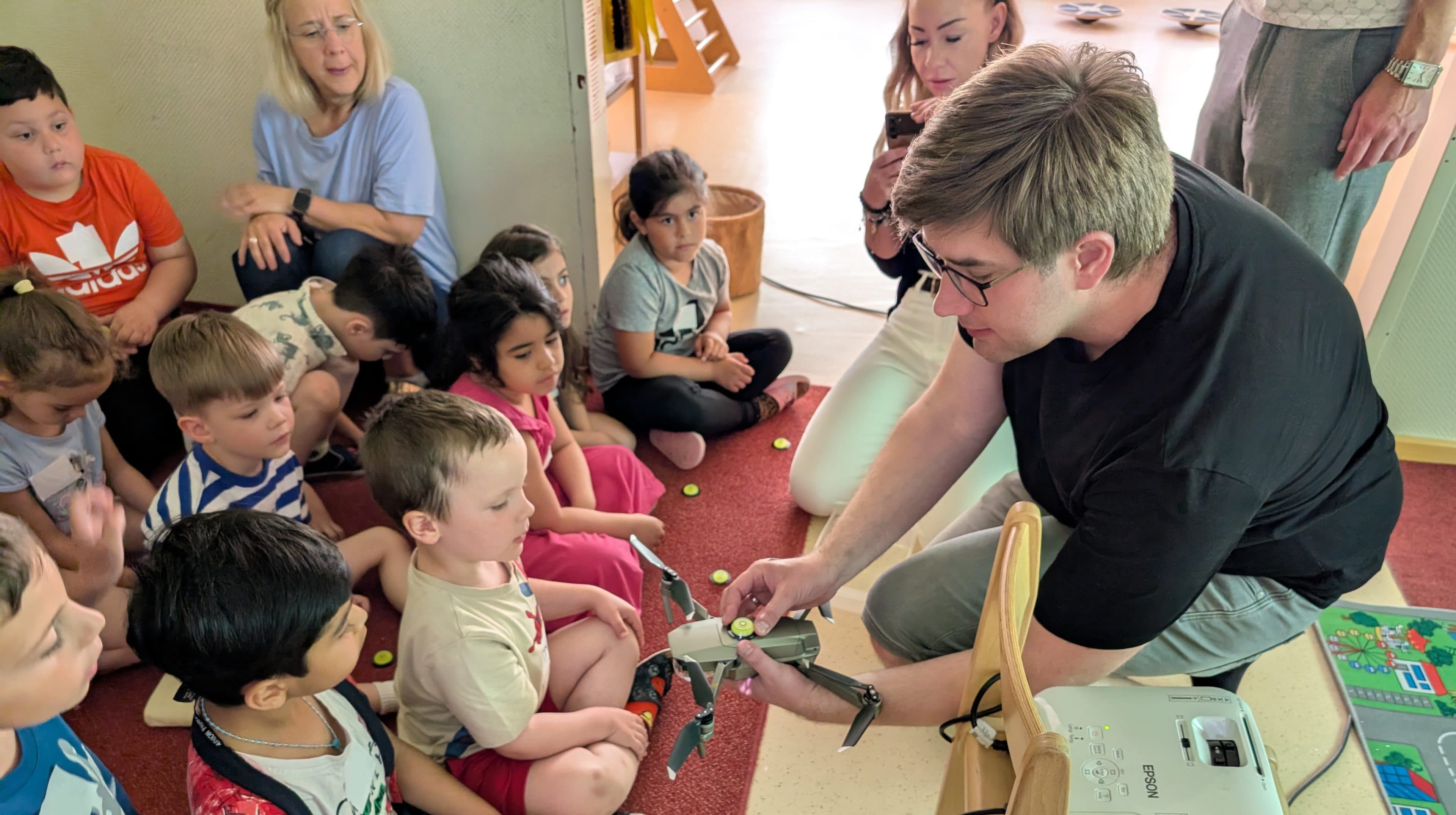
How does a drone work? Why does it stay in the air, and how does it know where to fly? The children in their final year of kindergarten at the City of Vienna’s kindergarten on Mitterhofergasse explored these and many other questions during the “Drones4Kids” workshop, which took place on May 27, 2026.
Science Ambassadors at the Young Science Platform
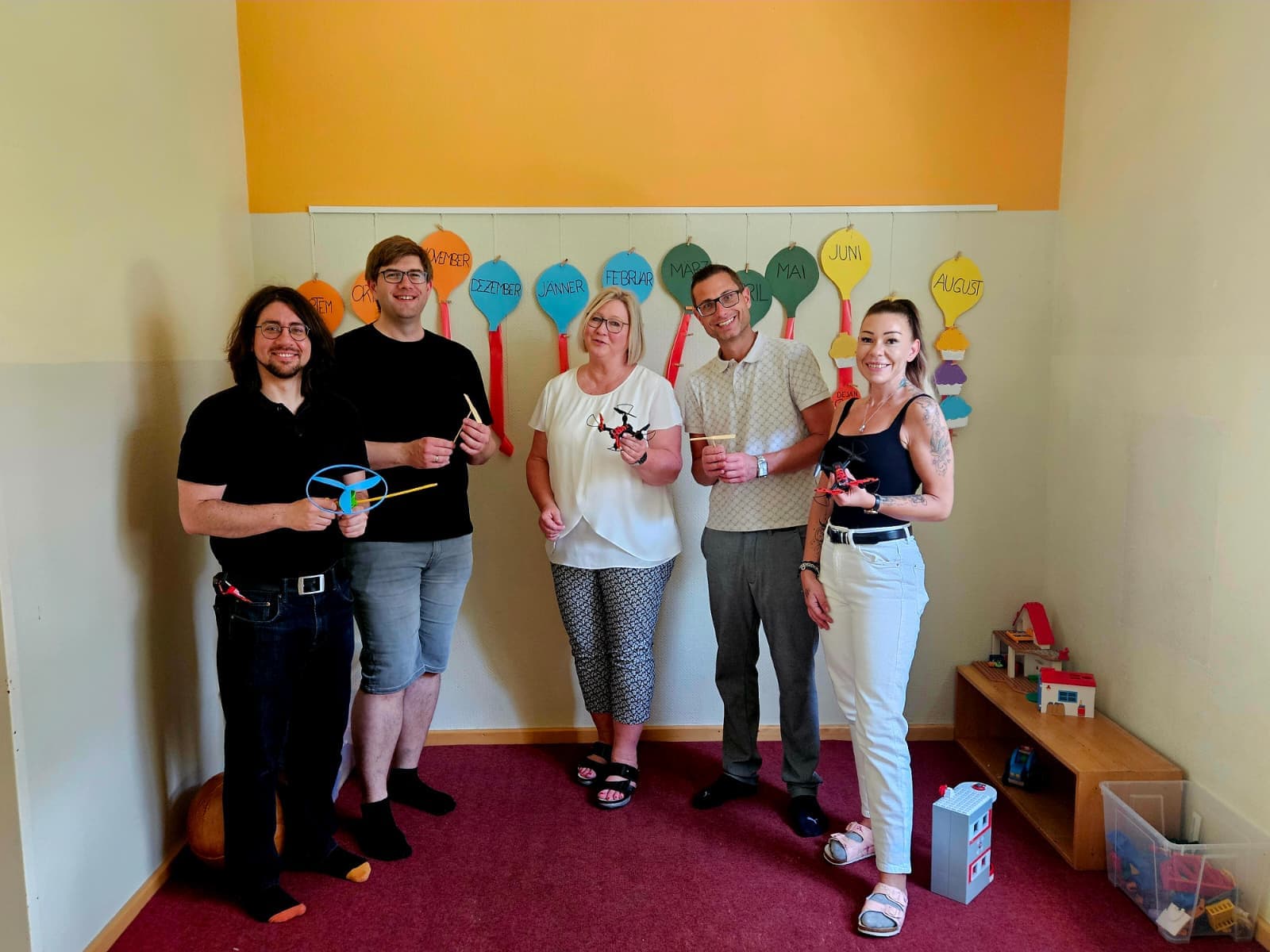
The workshop was led by Christoph Böhm, Christian Fibich, and Roman Beneder (lecturers and researchers at UAS Technikum Wien, from the Embedded Systems Competence Field). The initiative originated through the Young Science platform, where Christian Fibich and Roman Beneder are registered as science ambassadors and regularly inspire young people to take an interest in technology and science.
At the start of the workshop, the children gained insight into the diverse applications of drones through a specially curated video program. Together, they explored various areas of application—from rescue and relief operations to film production, transportation, and surveying tasks. The focus was primarily on how modern technology can support everyday life.
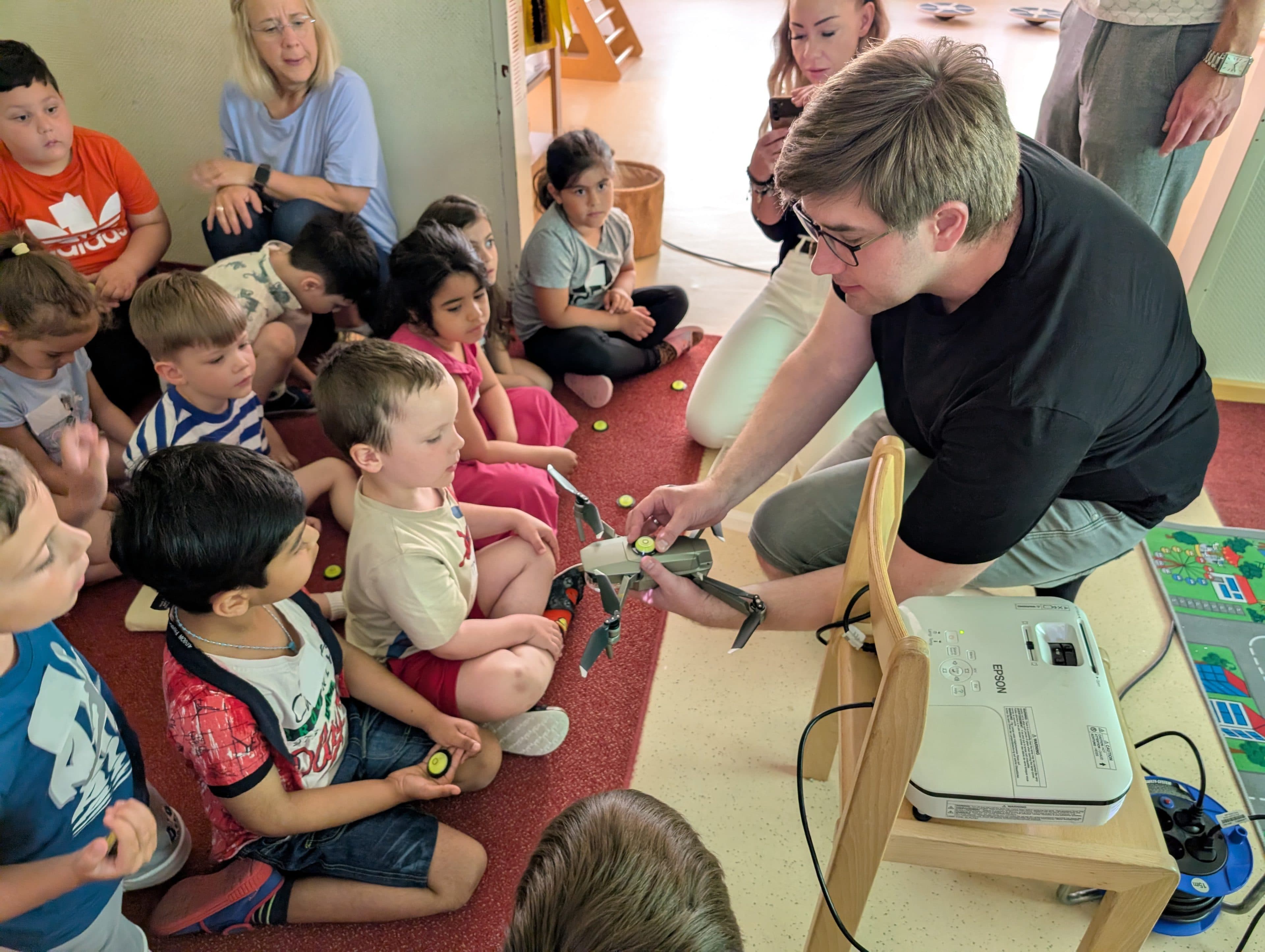
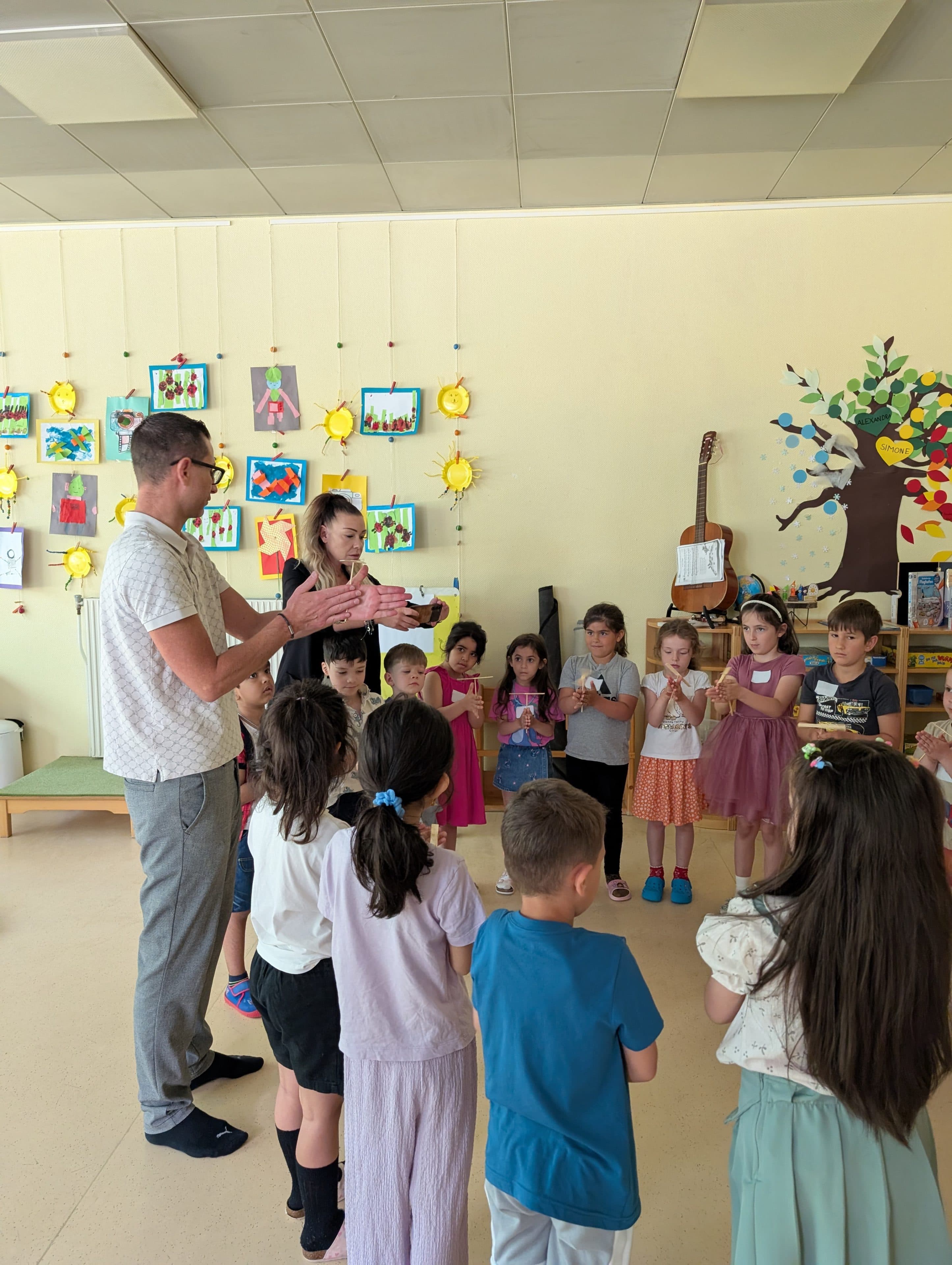
Afterward, the technical basics of drone technology were taught in an age-appropriate manner. Topics such as orientation, propellers, motors, and control systems were explained in a playful way and illustrated with hands-on exercises.
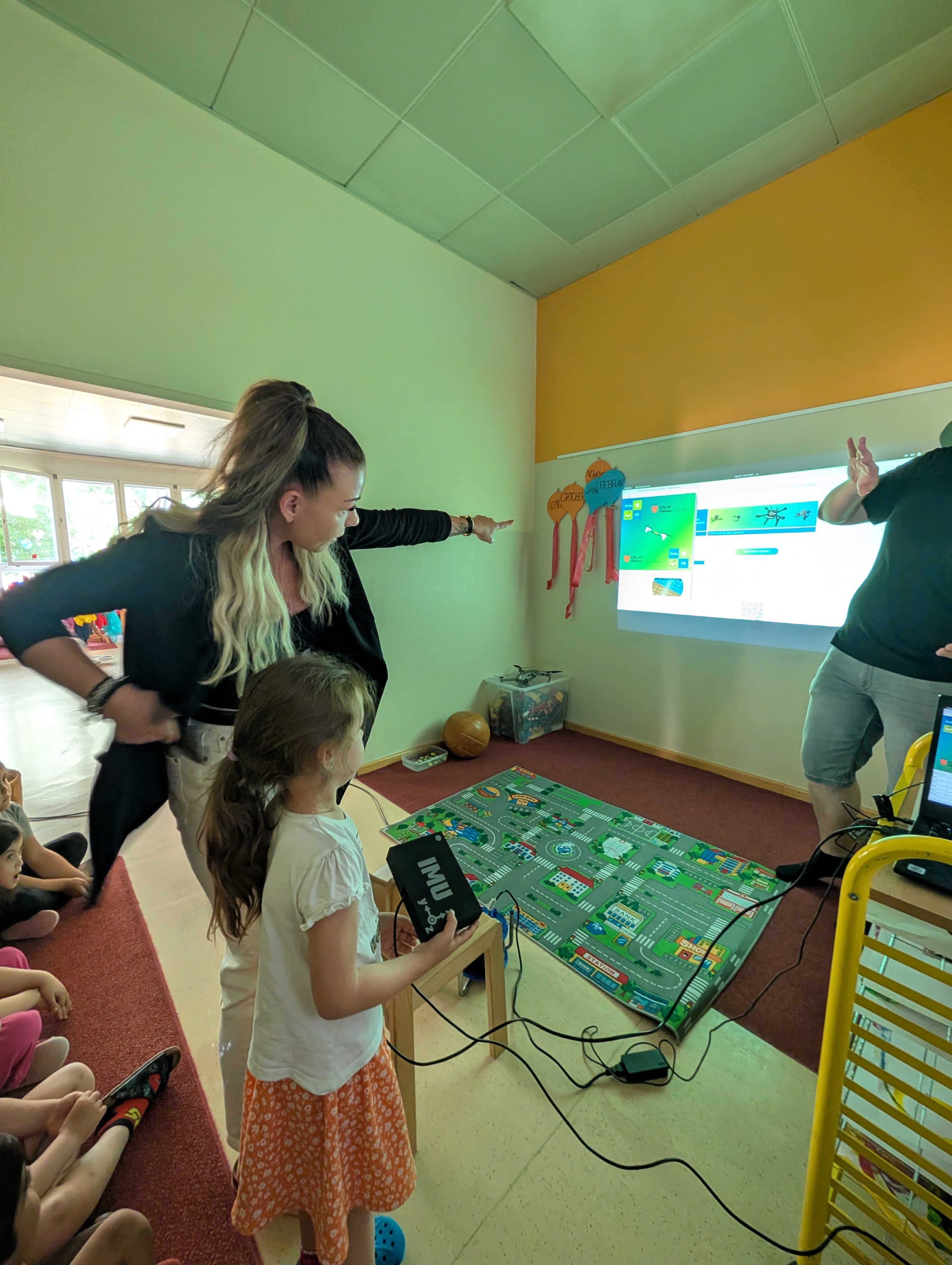
A drone’s orientation explained using a spirit level and the human sense of balance in the ear
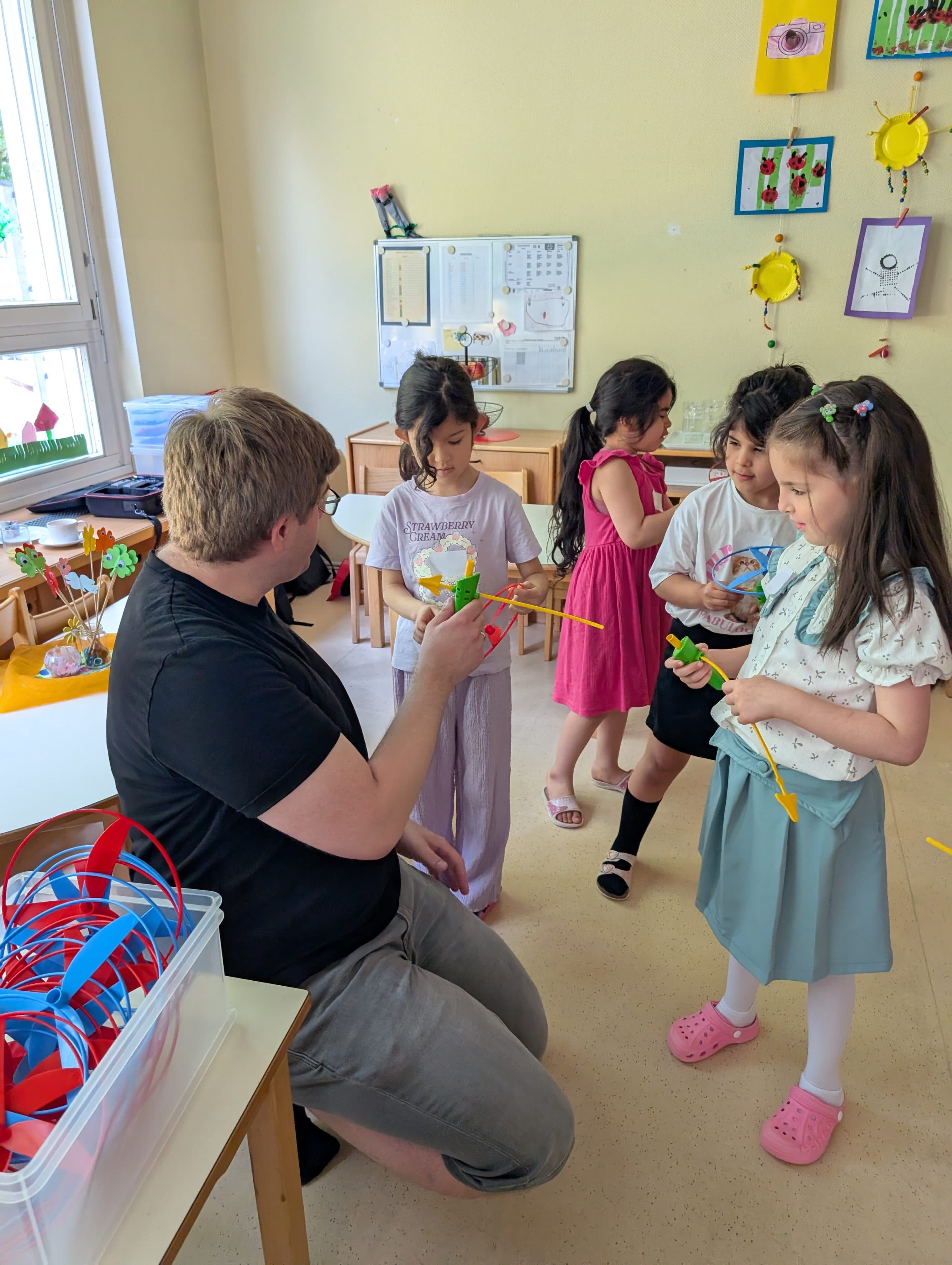
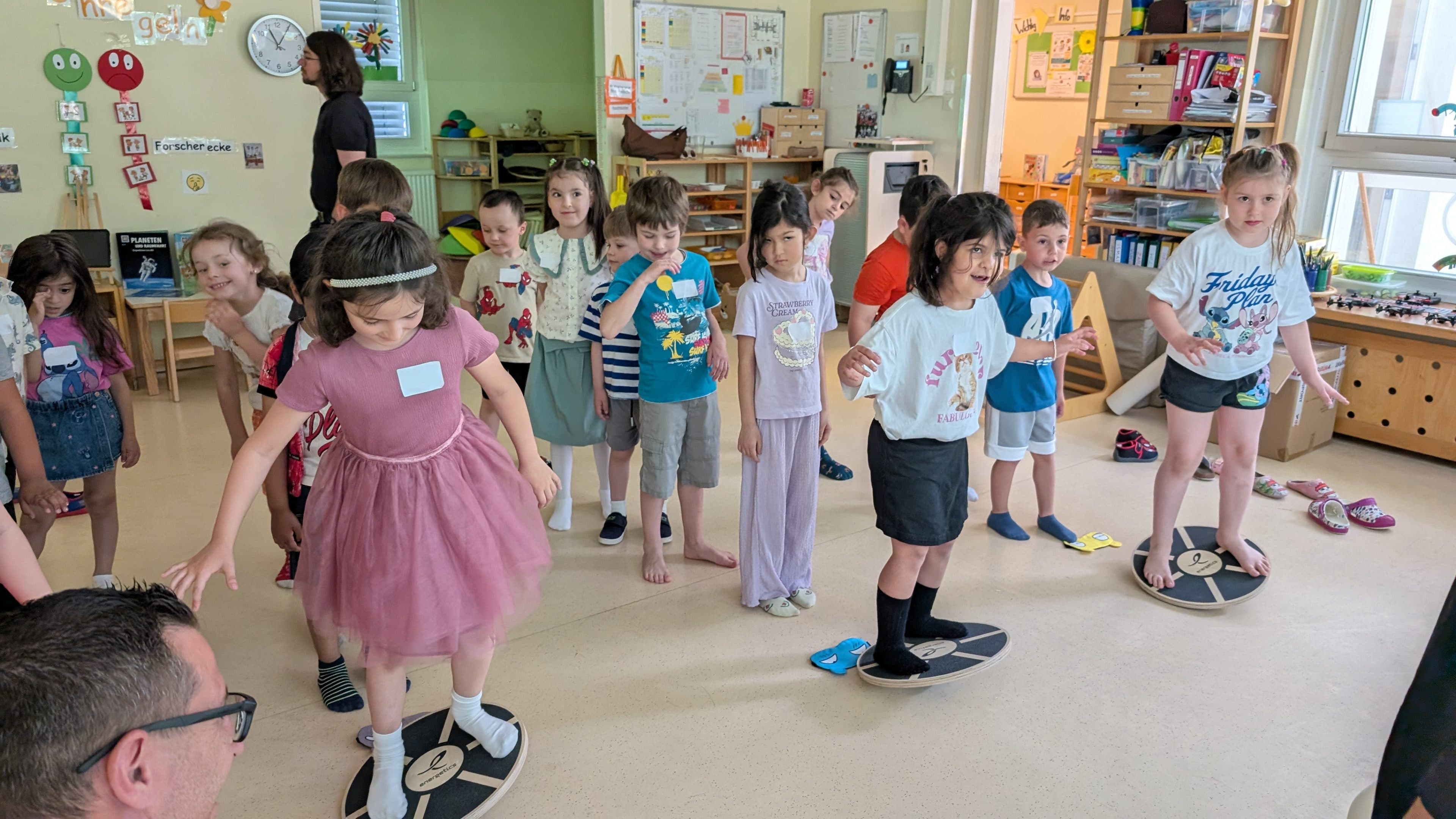
For example, a drone’s orientation was explained using a spirit level and the human sense of balance in the ear. The children were able to experience firsthand how propellers work, as well as lift and rotation directions, using hand-held propellers and a flight game. Finally, exercises on a balance board clearly demonstrated how a drone maintains its balance and constantly reacts to changes.
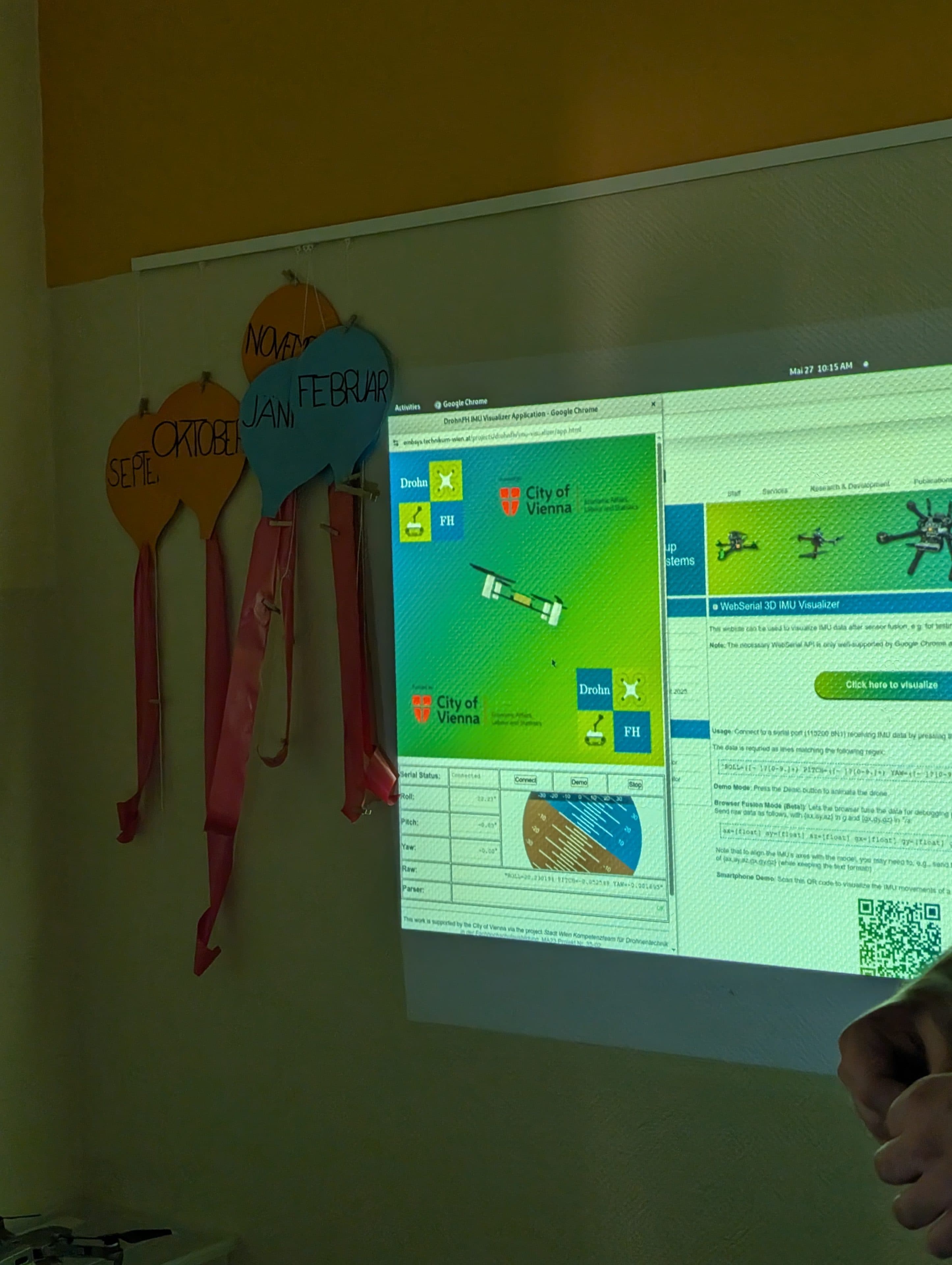
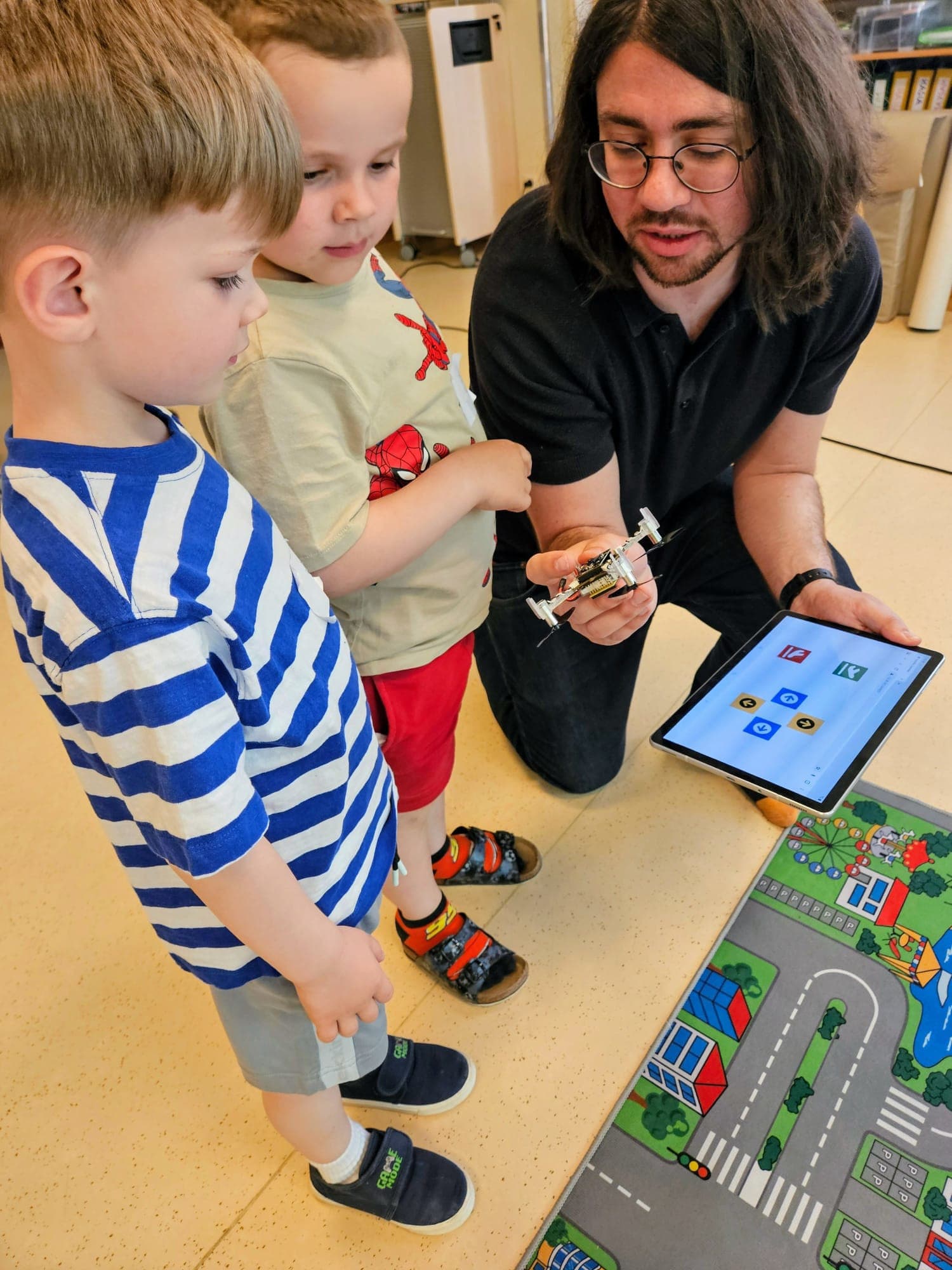
The highlight of the workshop was two hands-on flight stations. At the indoor station, the children were able to pilot a drone themselves. This station was supervised by Christian Fibich, who, as part of the project “City of Vienna Competence Team for Drone Technology in University of Applied Sciences Education”, developed a browser-based app that allows the drone to be controlled via a tablet using six simple commands—take off, land, forward, backward, left, and right. This allowed even the youngest participants to gain their first flying experiences and see firsthand how the technology responds to their inputs.
Commercially Available Drones Tested in the Kindergarten’s Garden
At the outdoor station, supervised by Christoph Böhm and Roman Beneder, the children were then able to try out commercially available drones in the kindergarten’s garden. With great enthusiasm, they performed their first flight maneuvers and put the technical concepts they had just learned into practice.
The kindergarten on Mitterhofergasse is managed by Sabine Worlitschek; the team from UAS Technikum Wien was also supported by Simone Teutsch during the planning and implementation of the workshop.
With “Drones4Kids,” the Embedded Systems department at UAS Technikum Wien demonstrated how technical education can be taught in a playful and accessible way even at a young age. The workshop impressively illustrated how curiosity, hands-on experience, and scientific expertise help spark an early enthusiasm for technology and innovation among young people.
City of Vienna Competence Team for Drone Technology in University of Applied Sciences Education
The project funded by the City of Vienna (MA23 – Project 35-02, Drone Technology) focuses on developing subfields of drone technology that are relevant to university of applied sciences education. Autonomous aerial, ground, and water vehicles are currently evolving into a promising technology with a wide range of civilian applications. As part of the curriculum at UAS Technikum Wien in the fields of robotics, mechatronics, electronics, embedded software, and the Internet of Things, specific technical aspects of designing such drones or autonomous robots are to be integrated more deeply into the curriculum as attractive and motivating practical examples.
Further Information:
Visits by science ambassadors to nurseries (IN GERMAN: Article on the OEAD website – Agency for Education and Internationalisation)
City of Vienna Competence Team for Drone Technology in University of Applied Sciences Education
Research Project: The project focuses on the development and research of drone technologies and innovative control and application possibilities.
New Project Brings Drones into Education (February 2024)
Podcast episode: Understanding Drone Technology: Education and Research (#113 Roman Beneder and Christian Fibich)
City of Vienna Kindergarten – Mitterhofergasse:
The City of Vienna kindergarten on Mitterhofergasse hosted the workshop and offered children the opportunity to learn about technology and science in a playful way.
City of Vienna Competence Teams for Drone Technology in University of Applied Sciences Education
Competence Area: Embedded Systems

Picture Gallery: