Trains Tested Under Controlled Extreme Weather Scenarios: Excursion to Rail Tec Arsenal
02 March, 2026
Trains are tested under controlled extreme weather scenarios in the climate wind tunnel at Rail Tec Arsenal. The excursion showed how research and practice in the railway sector are intertwined.
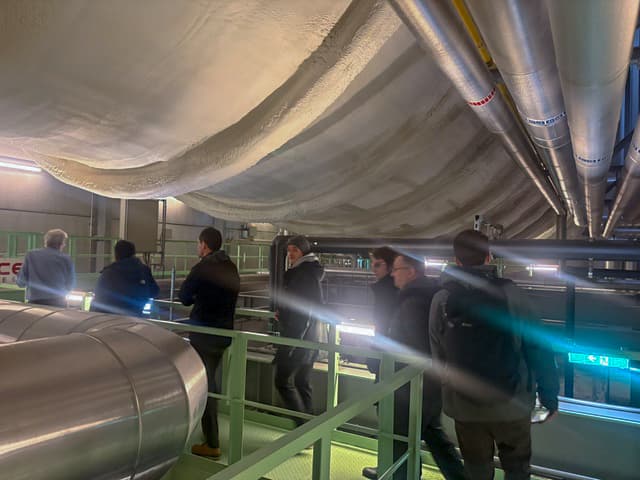
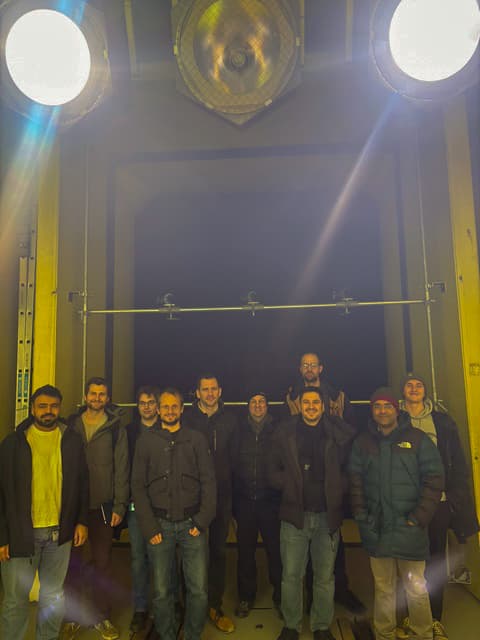
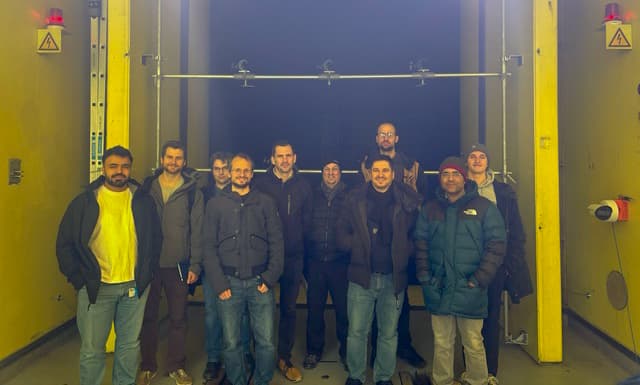
How do rail vehicles function in freezing temperatures, extreme heat, or hurricane-force winds? Representatives from the University of Applied Sciences Technikum Wien, including Momir Tabakovic and Bernhard Grasel (both from the Faculty of Industrial Engineering and the Competence Field Renewable Energy Technologies), found answers to these questions during a visit to the Rail Tec Arsenal (RTA) testing and research center in Vienna. The highlight of the excursion was an exclusive tour of the world’s longest climate wind tunnel – a research facility unique in Europe for simulating extreme environmental conditions.
Research under extreme conditions
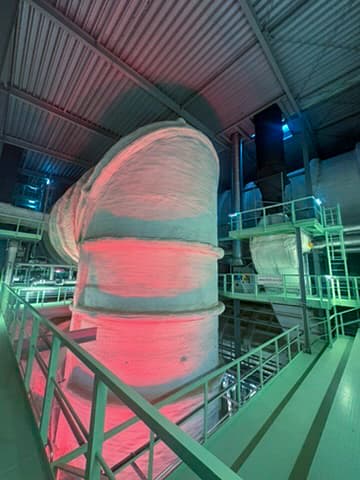
Rail Tec Arsenal’s climate wind tunnel is used to test rail vehicles under realistic extreme weather scenarios. Temperature ranges from −45 °C to +60 °C and wind speeds of up to 300 km/h can be precisely simulated. These controlled conditions make it possible to systematically analyze the functionality, safety, and reliability of trains under exceptional climatic conditions.
Participants gained insights into ongoing research projects dealing with the energy efficiency and operational safety of rail vehicles under extreme climatic conditions. Such studies are becoming increasingly important in view of the increasing weather extremes associated with climate change. The aim is to design technical systems in such a way that they function stably and efficiently even under demanding environmental conditions.
Practical teaching and applied research
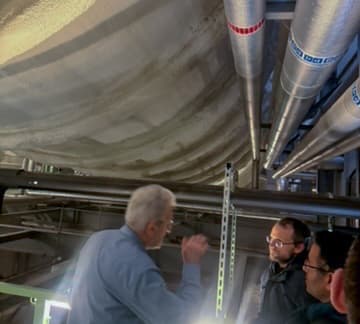
The excursion was accompanied by experts from the University of Applied Sciences Technikum Wien and offered representatives of the university the opportunity to get to know one of the railway industry’s leading international test centers up close. By viewing real-life test setups and prototype tests, theoretical teaching content from the fields of vehicle technology, energy systems, and infrastructure could be directly linked to practical applications.
Direct exchange with industry experts also provided insights into current norms, testing standards, and technological developments in the field of vehicle testing. Such contacts not only strengthen understanding of industrial requirements, but also open up perspectives for future project cooperation between universities and industry.
Cooperation as a bridge between science and industry
The University of Applied Sciences Technikum Wien attaches great importance to the close integration of teaching, research, and industrial application. The visit to Rail Tec Arsenal underscores this commitment: students benefit from practical learning environments, while dialogue with industry partners provides impetus for innovative research projects.
Further Information:
Picture Gallery: