Excursion to Biomass and Photovoltaic Plants in Krems and Grafenwörth
20 February, 2026
Students learned about the technical implementation and system integration of biomass and floating photovoltaic systems in the Austrian energy system on site.
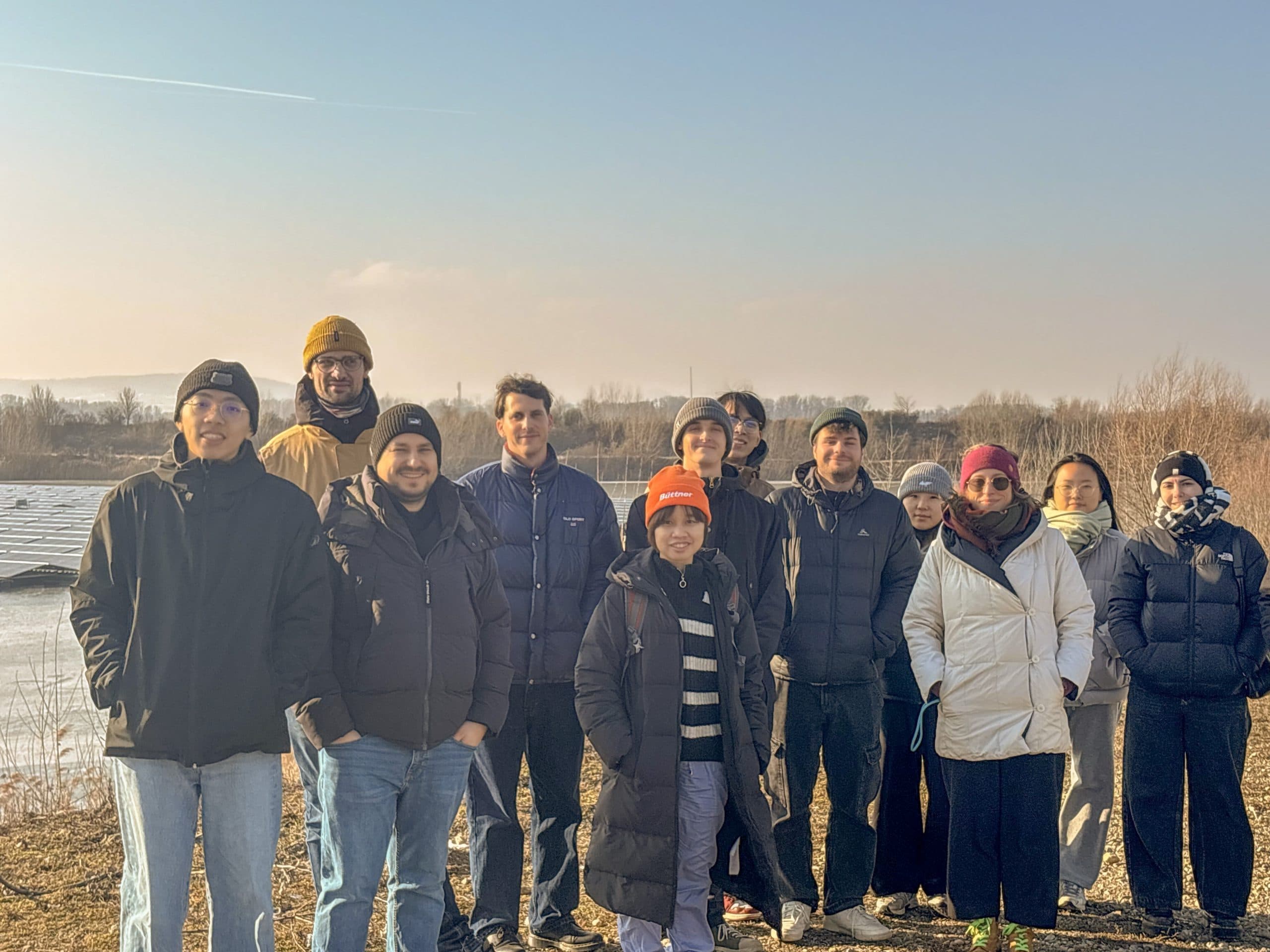
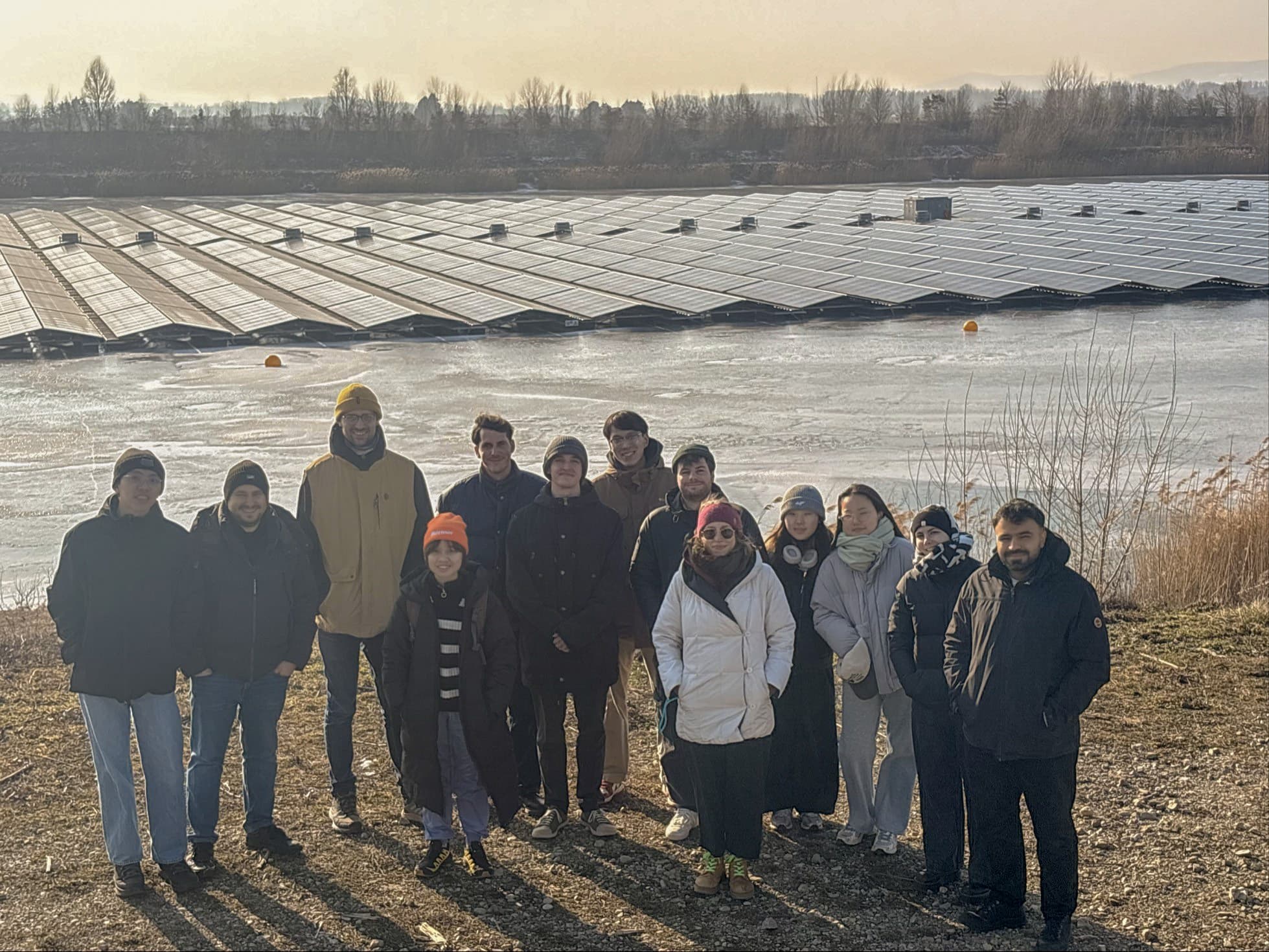
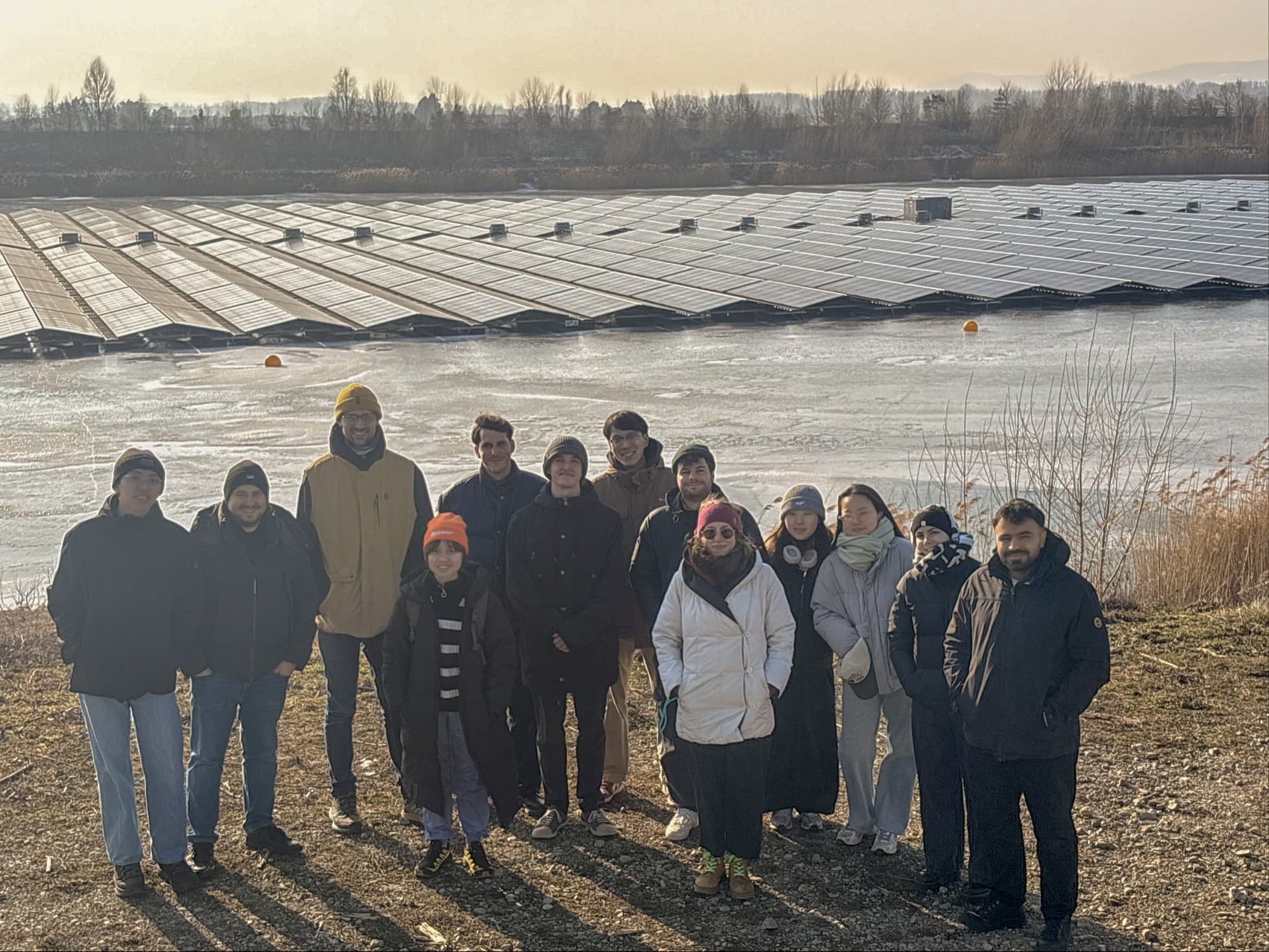
As part of the CIREL (Campus International Renewable Energy Laboratory) course, students from the University of Applied Sciences Technikum Wien visited the Krems biomass power plant and the floating photovoltaic plant in Grafenwörth in mid-January 2026. They were accompanied by Momir Tabakovic (Head of Competence Field Renewable Energy Technologies) and Daniel Österreicher (Lecturer & Researcher). The aim of the excursion was to learn about current renewable energy supply technologies in real-world operation and to analyze their technical and systemic interrelationships.
Energy from biomass: Efficient use of regional resources
The first stop took the group to the Krems biomass power plant, operated by EVN. The plant uses biogenic fuels to generate electricity and heat simultaneously in a combined heat and power process. This process enables particularly efficient use of the energy employed, as the waste heat generated during electricity production is used for district heating purposes.
On site, the students gained insights into the entire process chain – from the delivery and storage of fuels to combustion technology and grid feed-in. Among other things, they discussed efficiency, emission aspects, and the role of biomass in the context of regional value creation and security of supply.
Photovoltaics on water: Innovative land use
Next on the agenda was the floating photovoltaic plant in Grafenwörth. The plant is installed on an artificially created body of water and is one of the largest floating photovoltaic systems in Austria. The use of existing water areas avoids additional land consumption – a key factor in the conflict between energy expansion and spatial planning.
The students examined the technical features of this type of construction, including anchoring systems, material requirements, and potential effects of natural cooling of the modules. Questions of grid integration, maintenance, and long-term operational safety were also discussed on site with experts.
Exchange with experts
The excursion illustrated how different renewable technologies are integrated into the energy system and which technical, economic, and ecological conditions need to be taken into account. The direct exchange with experts from the field enabled the students to critically reflect on theoretical content from the course and relate it to real operating data.
With formats such as these, the University of Applied Sciences Technikum Wien strengthens practice-oriented education in the field of sustainable energy systems and promotes understanding of the complex challenges of the energy transition.
The excursion was organized as part of the Renewable Energy Laboratory course with Erasmus students from the following degree programs: Master Medical Engineering & eHealth, Bachelor Biomedical Engineering, Bachelor Renewable Energies, Bachelor Computer Science, and Bachelor International Business and Engineering.
Further information:
Students experience renewable energies: From biomass in Krems to floating PV in Grafenwörth (July 2025)
Master’s program in Renewable Energy Engineering
Faculty of Industrial Engineering
EVN – Krems biomass cogeneration plant
EVN – Largest floating PV plant in Central Europe in Grafenwörth
Picture Gallery: